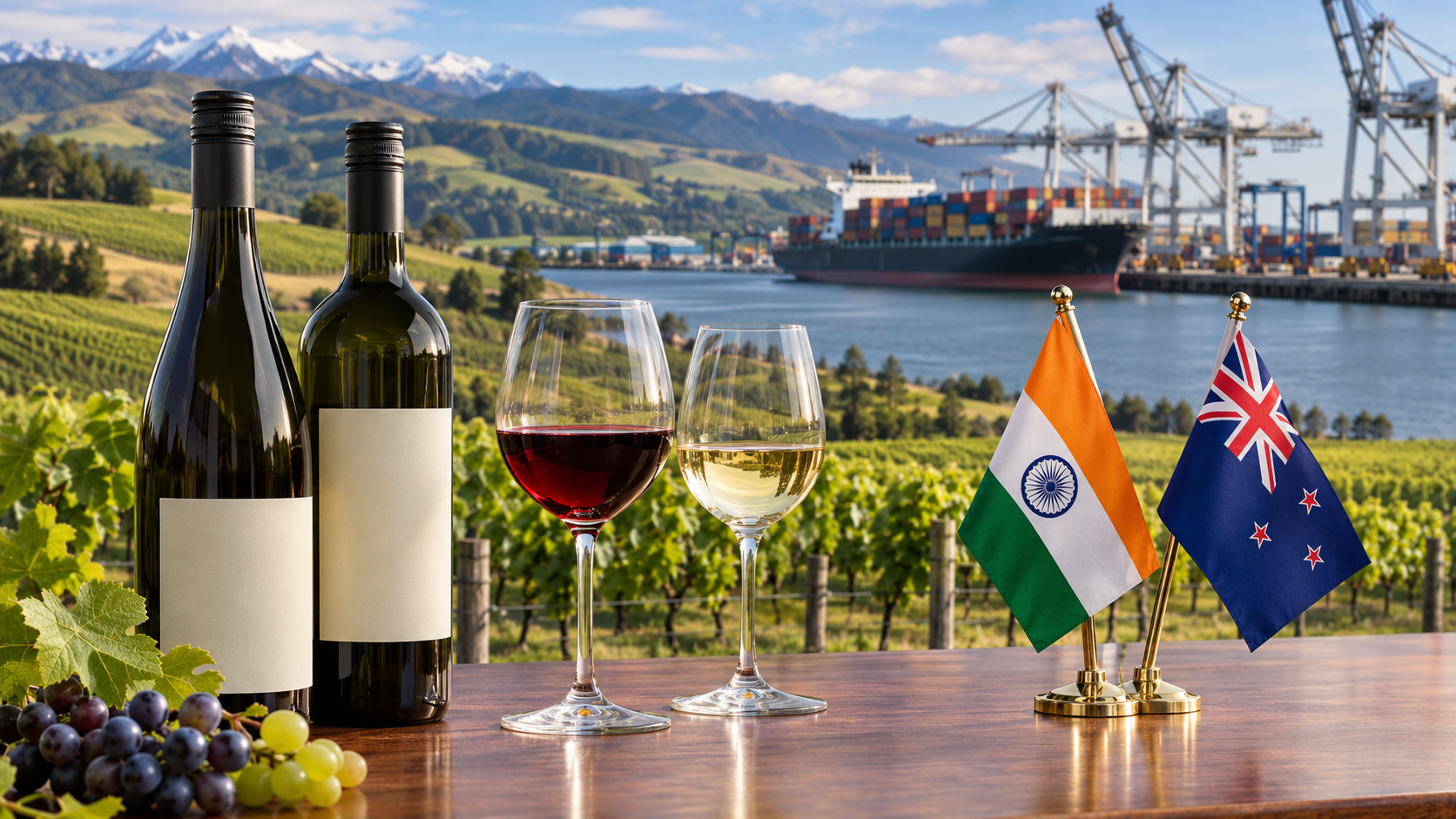
New Zealand High Commissioner Patrick John Rata says the agreement will improve market opportunities, with 20 companies participating in ProWine Mumbai 2026.
Highlights:
- Wine tariffs will fall from 150% to either 25% or 50%.
- The reductions will be phased in over a 10-year period.
- The concessions form part of the recently concluded bilateral FTA.
- High Commissioner Patrick John Rata outlined the changes in Mumbai.
- Twenty New Zealand companies are participating in ProWine Mumbai 2026.
- Lower tariffs could improve pricing competitiveness in India.
India will progressively reduce import tariffs on New Zealand wine from 150 per cent to either 25 per cent or 50 per cent over a decade under the recently concluded India–New Zealand Free Trade Agreement, according to New Zealand High Commissioner to India Patrick John Rata.
Speaking on the sidelines of ProWine Mumbai 2026 on Wednesday, Rata said the agreement would make India a more attractive market for New Zealand companies seeking business opportunities.
The proposed reductions represent a substantial change in the tariff treatment of New Zealand wine. However, the cuts will be phased in over a 10-year period, meaning the lower rates will not apply in full immediately.
The information shared did not specify which wines would attract the final 25 per cent rate and which would face a 50 per cent tariff. It also did not outline the intermediate annual reductions or the date on which the concessions would begin.
For New Zealand wine exporters, lower duties could improve their ability to compete on price in India. The phased transition would also give companies time to assess demand, develop distribution relationships and plan their market presence.
Twenty companies from New Zealand are participating in ProWine Mumbai 2026 to explore business opportunities, Rata said. Their presence provides a platform to engage with potential Indian buyers and business partners as the two countries prepare for closer trade ties.
For Indian consumers, the tariff concessions could eventually translate into more competitive prices and a wider selection of New Zealand wines. The actual effect on retail prices would depend on how the duty reductions are passed through, alongside other taxes, distribution costs and commercial pricing decisions.
A reduction in import tariffs alone therefore does not establish how much a particular bottle will become cheaper. The timing and scale of any price changes will depend on the applicable tariff category and implementation schedule.
Rata’s remarks point to improved prospects for New Zealand businesses in India following the trade agreement. For wine companies considering entry or expansion, the key details will be the final product classifications, the timetable for tariff reductions and the commencement of the agreed concessions.