
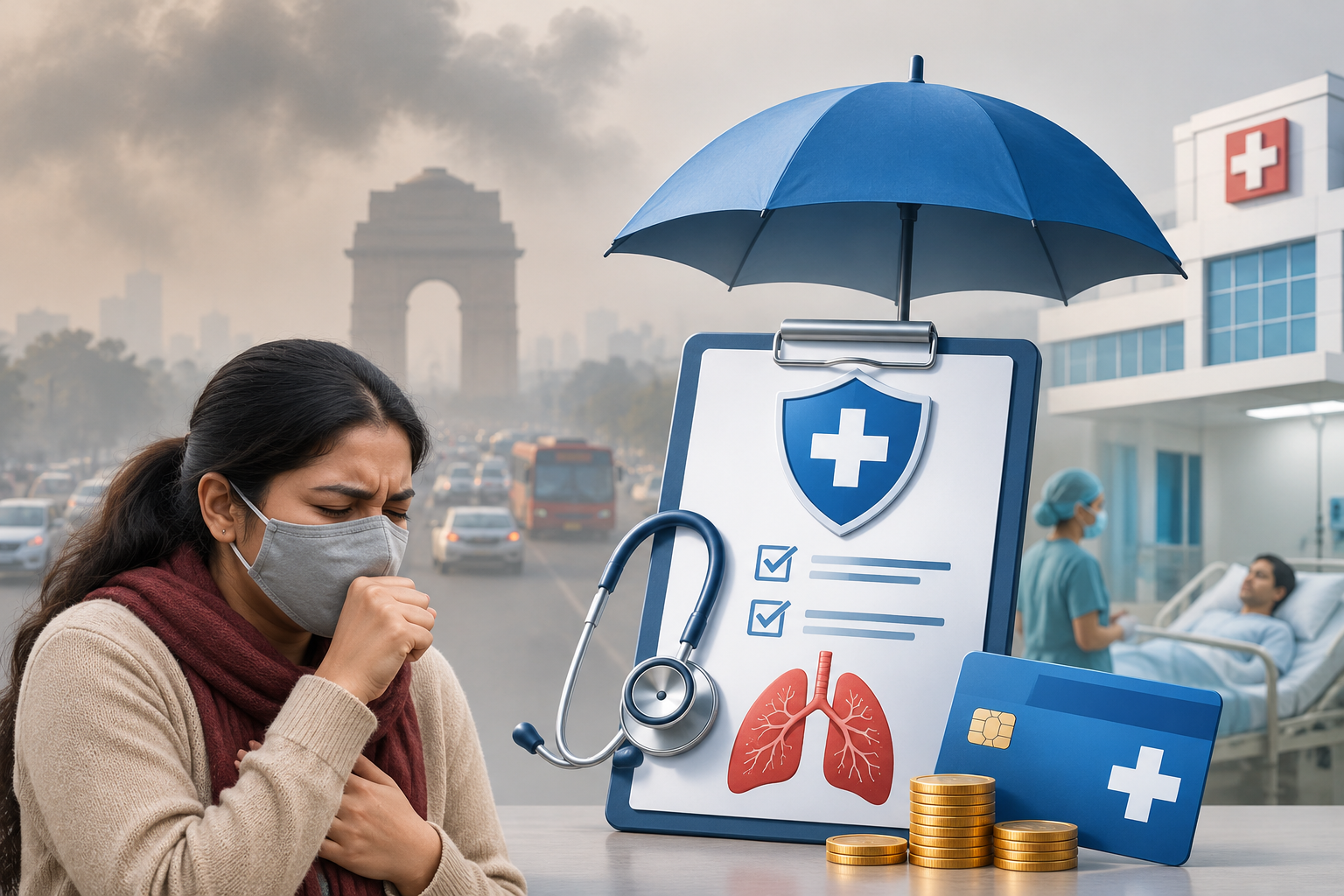
As worsening air quality increases respiratory health concerns, health insurance policyholders should understand coverage for pollution-related illnesses, hospitalisation expenses and pre-existing conditions.
Highlights
- Air pollution can aggravate asthma, bronchitis and other respiratory illnesses.
- Health insurance policies may cover hospitalisation caused by pollution-related diseases.
- Routine OPD consultations and medicines may not be covered under basic policies.
- Pre-existing respiratory diseases can be subject to waiting periods.
- Cashless hospitalisation depends on insurer approval and hospital arrangements.
- Policyholders should check exclusions, waiting periods and room-rent limits.
New Delhi, November 10: As air pollution becomes a growing health concern across several Indian cities, the financial burden of treating respiratory illnesses is bringing health insurance coverage into focus. With deteriorating air quality potentially triggering asthma attacks, breathing difficulties and other medical complications, policyholders are increasingly likely to question whether their medical insurance will cover pollution-related treatment.
The good news is that many comprehensive health insurance policies in India cover hospitalisation for illnesses associated with air pollution, subject to policy terms and conditions. However, coverage is generally determined by the diagnosed illness, medical necessity and policy provisions rather than pollution exposure alone.
What Pollution-Related Diseases Are Covered?
Health insurance may cover hospitalisation for asthma attacks, bronchitis, pneumonia and other respiratory complications if the treatment meets the policy’s eligibility requirements.
For example, if a patient experiences a severe asthma attack requiring hospital admission, eligible treatment expenses may be covered. These can include room charges, diagnostic tests, medicines and doctor fees, depending on the policy.
However, not every pollution-related medical expense qualifies for reimbursement. Routine consultations, inhalers, outpatient medicines and preventive health products may remain outside standard coverage unless the policy includes outpatient department (OPD) benefits.
Pre-Existing Conditions Could Affect Claims
People already suffering from asthma, chronic obstructive pulmonary disease (COPD) or other respiratory conditions should pay particular attention to pre-existing disease clauses.
Under India’s insurance regulations, the waiting period for disclosed pre-existing diseases can be up to 36 months, depending on the policy. Coverage may therefore be restricted during the applicable waiting period.
What Should Policyholders Check?
Insurance experts generally recommend reviewing the sum insured, hospital network, cashless treatment facilities, co-payment requirements and disease-specific exclusions before purchasing or renewing a policy.
Policyholders should also understand that purchasing insurance after developing a medical condition does not guarantee immediate coverage for that illness.
As pollution-related health risks persist, having suitable medical insurance can help protect households against unexpected hospitalisation expenses. However, consumers should carefully examine policy documents rather than assume that every illness or treatment linked to poor air quality will automatically be covered.
Sources: Mint +2