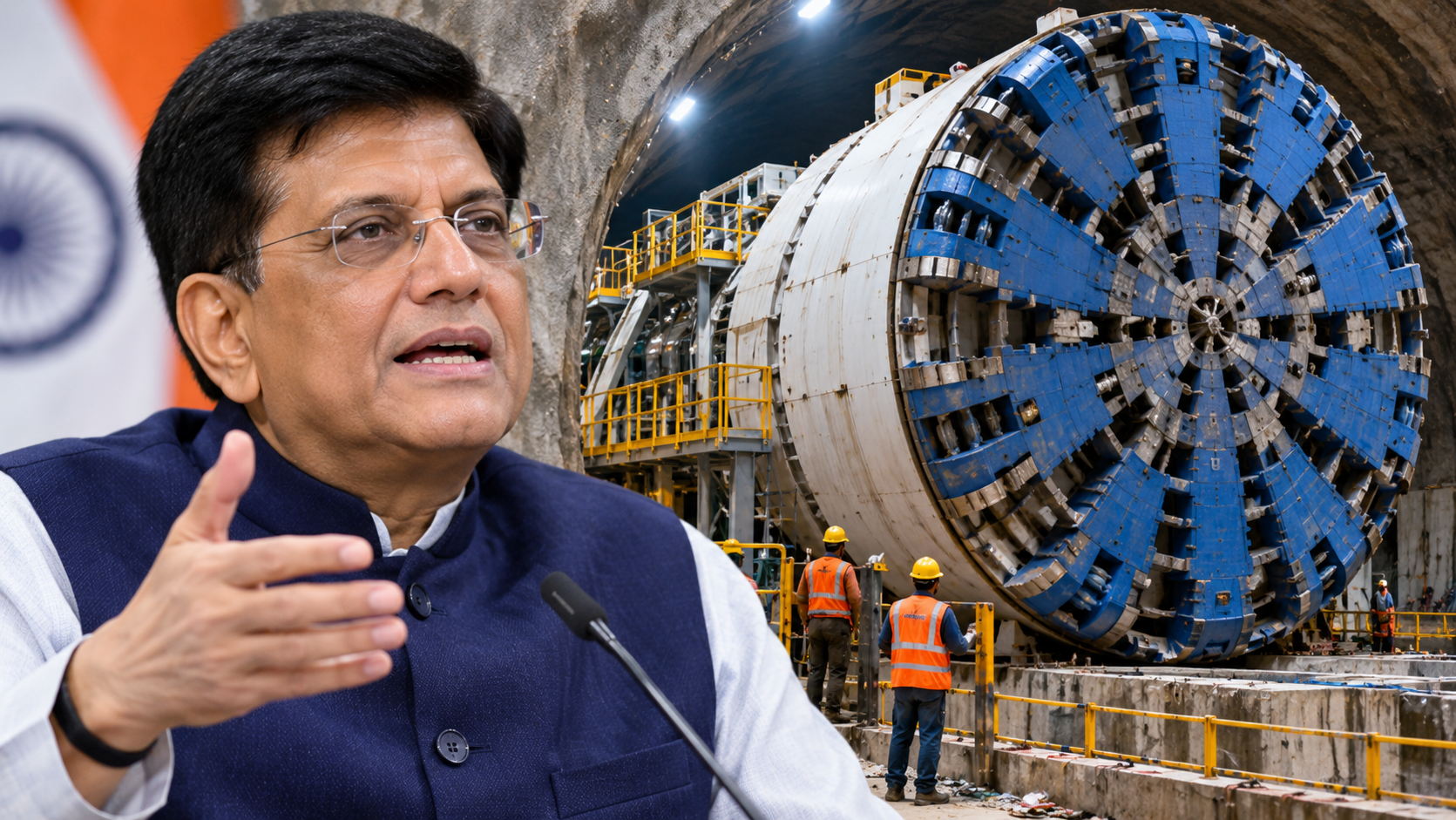
Commerce Minister Piyush Goyal said India would not compromise its strategic interests to secure critical technology, as China’s new export controls on tunnel-boring machines are scheduled to take effect on November 18.
Highlights
- India is prepared to manufacture tunnel-boring machines domestically if China restricts supplies.
- Piyush Goyal said India would not compromise its strategic interests.
- China’s new export licensing requirements will take effect on November 18, 2026.
- Tunnel-boring machines are essential for metro, railway and underground infrastructure projects.
- Indian startups are also developing alternatives to rare-earth-based motors.
- Goyal expressed hope for improved India-China relations despite trade challenges.
India Can Develop Tunnel-Boring Machines if China Blocks Supplies, Says Piyush Goyal
New Delhi, November 3: India is prepared to develop and manufacture its own tunnel-boring machines (TBMs) if China restricts exports of the critical construction equipment, Union Commerce and Industry Minister Piyush Goyal said on Tuesday. His remarks come amid growing concerns over Beijing’s latest export controls, which could affect major infrastructure projects across India.
Speaking at the Young Leaders Discourse Forum at Kirori Mal College in Delhi, Goyal emphasised that India would not compromise its strategic interests or depend on concessions from other countries to secure essential technologies.
“If they don’t give us tunnel-boring machines, we will develop it in India. India is not someone who will give in,” Goyal said. Moneycontrol +1
China’s Export Restrictions to Begin November 18
China has announced new export licensing requirements for tunnel-boring machines and other specialised construction equipment, effective November 18, 2026.
The restrictions cover machinery used in underground construction, including metro rail networks, railway tunnels and major road infrastructure projects.
Tunnel-boring machines are particularly important for large-scale projects because they allow engineers to excavate underground passages with greater precision and reduced surface disruption.
India’s metro expansion and high-speed railway projects could face additional challenges if supplies of these machines are delayed. Moneycontrol +1
India Working on Rare-Earth Alternatives
Goyal also highlighted India’s efforts to reduce dependence on China for rare-earth materials, which are widely used in electric vehicles, electronics, wind turbines and defence equipment.
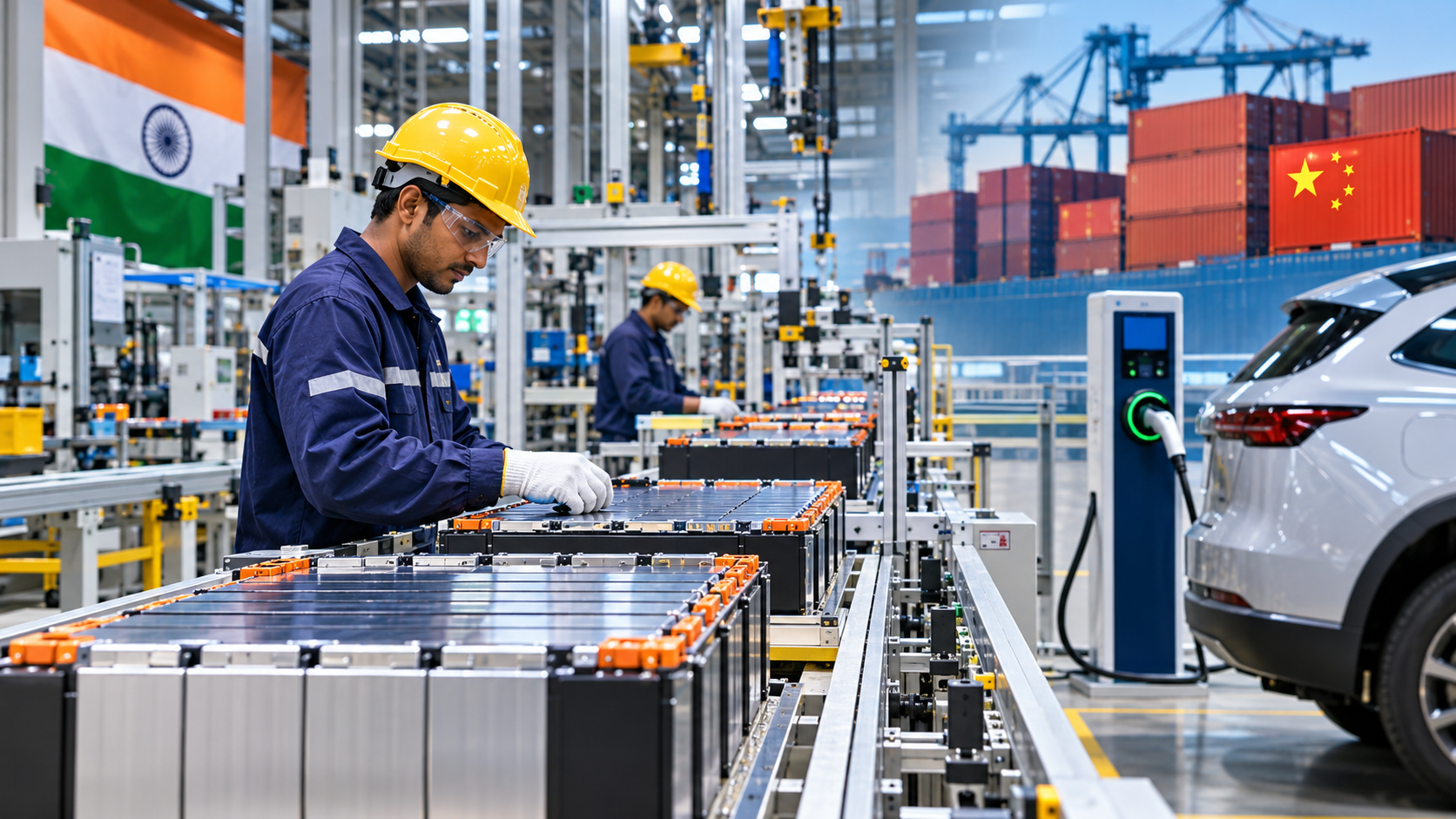
He said the government had encouraged domestic startups to develop motors that do not require rare-earth materials.
According to the minister, some Indian startups have already begun manufacturing rare-earth-free motors offering comparable quality and efficiency.
The initiative reflects India’s broader efforts to strengthen domestic manufacturing capabilities in strategically important industries. Moneycontrol
India-China Relations Remain Important
Despite concerns over export restrictions, Goyal said India did not want to damage its relationship with China.
He expressed optimism that bilateral relations could improve if additional trade obstacles were avoided.
India continues to maintain significant commercial ties with China while pursuing greater self-reliance in critical technologies and industrial equipment.
Push for Domestic Infrastructure Equipment Manufacturing
India has been exploring measures to expand domestic production of advanced construction equipment, including tunnel-boring machines.
In August, Reuters reported that the government was considering a $1.2 billion incentive programme to encourage local manufacturing of specialised infrastructure machinery.
The proposed initiative could help reduce import dependence and strengthen India’s industrial supply chains. Reuters
Goyal’s latest remarks underline the government’s focus on building domestic technological capabilities while maintaining trade engagement with international partners.
Source: Moneycontrol, November 3, 2026