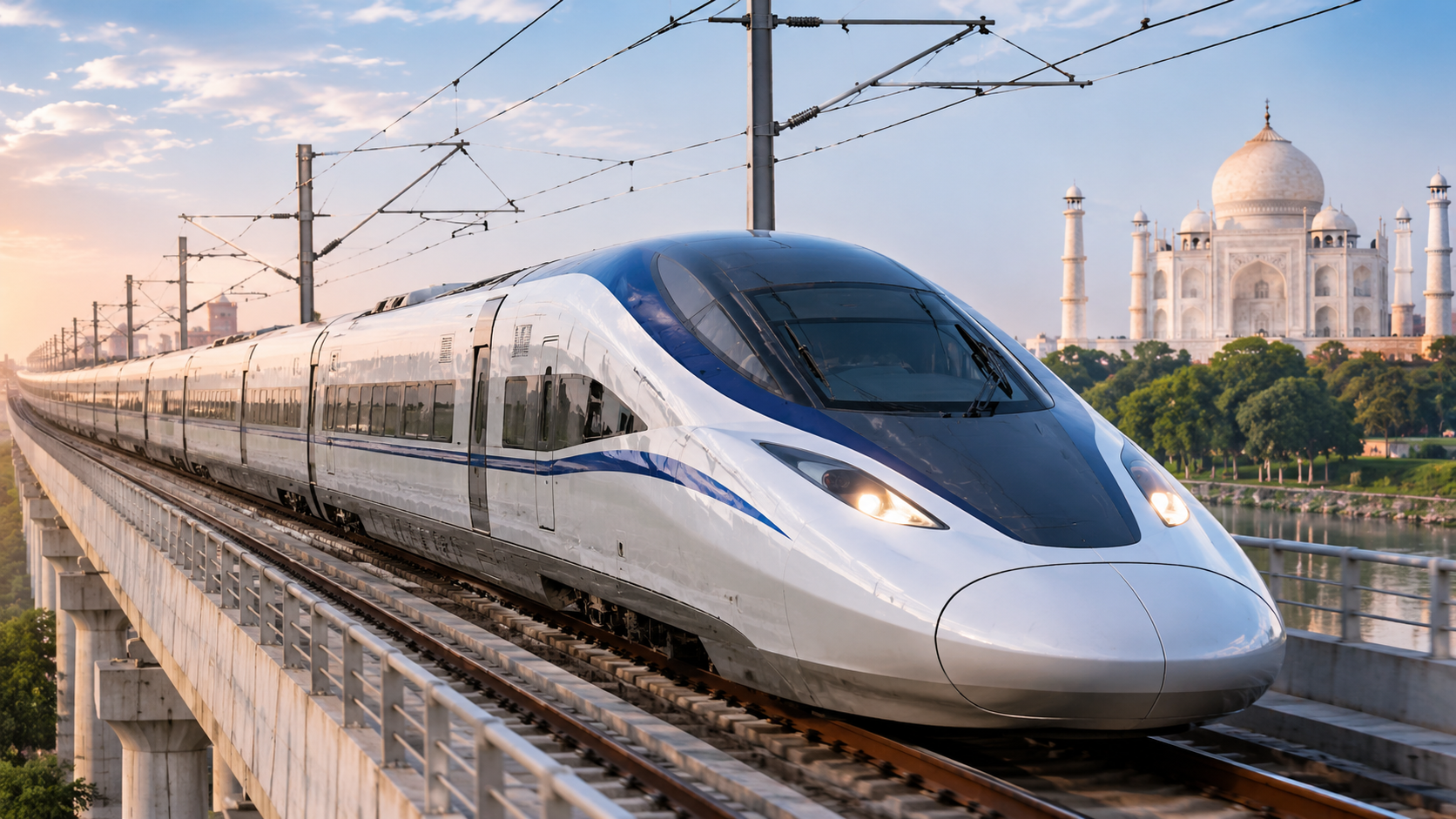
The proposed high-speed rail corridor will connect Delhi, Agra, Kanpur, Lucknow, Ayodhya, Varanasi and other major cities, significantly reducing travel time across northern India.
Highlights
- PM Narendra Modi approves the north corridor of the proposed bullet train project.
- Delhi to Agra journey expected to take just 59 minutes.
- Delhi to Kanpur travel time projected at 1 hour and 45 minutes.
- Delhi to Lucknow journey expected to take 2 hours and 21 minutes.
- Varanasi to Delhi travel time estimated at 3 hours and 35 minutes.
- Corridor will connect Delhi, Agra, Kanpur, Lucknow, Ayodhya, Varanasi, Prayagraj and Siliguri.
New Delhi, November 1, 2026: Prime Minister Narendra Modi has approved the north corridor of the proposed bullet train project, Railway Minister Ashwini Vaishnaw announced on Saturday. The ambitious high-speed rail project is expected to transform connectivity across northern India by significantly reducing travel time between major cities.
Speaking at an event in Varanasi, Vaishnaw said the government aims to build a modern transportation network that will benefit millions of passengers while strengthening economic activity across the region.
Delhi to Agra in Just 59 Minutes
According to the Railway Minister, the proposed bullet train corridor will dramatically reduce travel times between major destinations.
Once operational, passengers will be able to travel from Delhi to Agra in just 59 minutes, while the journey from Delhi to Kanpur will take approximately 1 hour and 45 minutes.
Similarly, the Delhi-Lucknow journey is expected to take 2 hours and 21 minutes, compared with the substantially longer travel times on existing railway services.
The Varanasi-Delhi journey is projected to take around 3 hours and 35 minutes.
Bullet Train to Connect Major Cities
The proposed corridor will connect Delhi, Agra, Kanpur, Lucknow, Ayodhya, Varanasi, Prayagraj and Siliguri, extending high-speed rail connectivity across several important economic, cultural and religious centres.
Vaishnaw said the project would support the development of small-scale industries and create new opportunities for young people, middle-income families and artisans.
The improved connectivity is also expected to boost tourism, business travel and regional economic development.
Government Focuses on Made-in-India Technology
The Railway Minister emphasised that the construction work would be undertaken in India, highlighting the government’s focus on domestic infrastructure development and technological capabilities.
He said the proposed high-speed rail network would help reshape transportation across northern India and improve connectivity between major urban centres.
Travel Times Set to Change
The project is expected to offer a faster alternative to conventional train services and road travel.
However, the government has not announced a specific completion date or the timeline for starting commercial operations.
Once completed, the proposed corridor could become a major milestone in India’s efforts to expand high-speed railway infrastructure and improve intercity mobility.