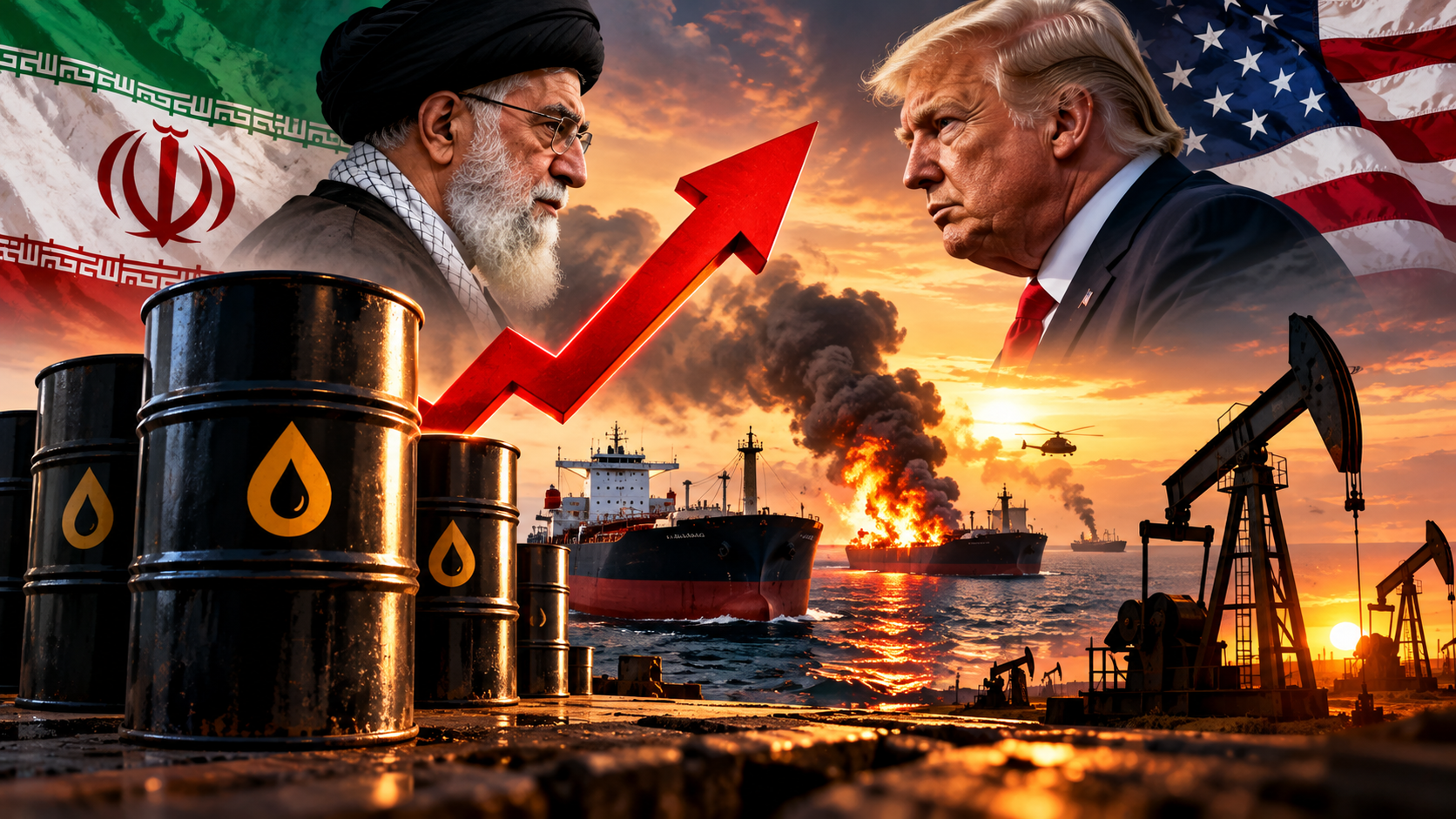
Brent crude has gained nearly 6% this week amid rising tensions between the US and Iran, growing attacks on oil tankers and fears of disruptions to global energy supplies.
Highlights
- Crude oil prices are approaching $117 per barrel amid geopolitical tensions.
- Brent crude has reportedly gained nearly 6% this week.
- Rising US-Iran tensions have increased concerns about a direct military confrontation.
- Attacks on oil tankers are adding uncertainty to global energy supplies.
Crude Oil Nears $117 as US-Iran Tensions and Tanker Attacks Drive Prices Higher
New Delhi, October 24, 2026: Global crude oil prices are approaching $117 per barrel as escalating tensions between the United States and Iran raise concerns about possible disruptions to international energy supplies.
According to the reported market update, Brent crude has gained nearly 6% this week, supported by growing fears of a direct military confrontation between Washington and Tehran.
The rise comes amid reports of increasing attacks on oil tankers, adding fresh uncertainty to global shipping routes and energy markets.
Why Are Crude Oil Prices Rising?
One of the biggest factors behind the reported increase is the possibility of a wider conflict involving the United States and Iran.
Iran is an important oil producer, and any disruption to its production or exports could affect international supply.
The Strait of Hormuz, a crucial shipping route for global oil trade, is another major concern. Any interruption to tanker movement through the region could delay shipments and increase transportation costs.
As geopolitical risks rise, traders may demand higher prices to account for potential supply disruptions.
Tanker Attacks Add to Supply Concerns
Reports of attacks on oil tankers have added to uncertainty in international energy markets.
Such incidents can increase shipping insurance premiums, raise freight costs and create difficulties for companies transporting crude oil.
Even when physical oil supplies remain available, fears of disruptions can push international benchmark prices higher.
Why Is the Rally Difficult to Control?
Oil prices depend not only on current production and consumption but also on expectations about future supplies.
Measures aimed at stabilising markets may have a limited immediate impact if traders remain concerned about geopolitical developments.
The possibility of supply disruptions, higher transportation costs and uncertainty over the duration of regional tensions can continue to support prices.
What Does Higher Crude Mean for India?
India depends heavily on imported crude oil to meet its energy requirements.
A sustained increase in global oil prices could raise the country’s import bill and put pressure on the rupee.
Higher crude prices can also increase costs for transportation, aviation, chemicals and other industries that depend on petroleum products.
However, the impact on domestic petrol and diesel prices would depend on government policies, taxes and pricing decisions by oil marketing companies.
For now, developments involving the US, Iran and international oil shipping routes remain important factors to watch in global energy markets.