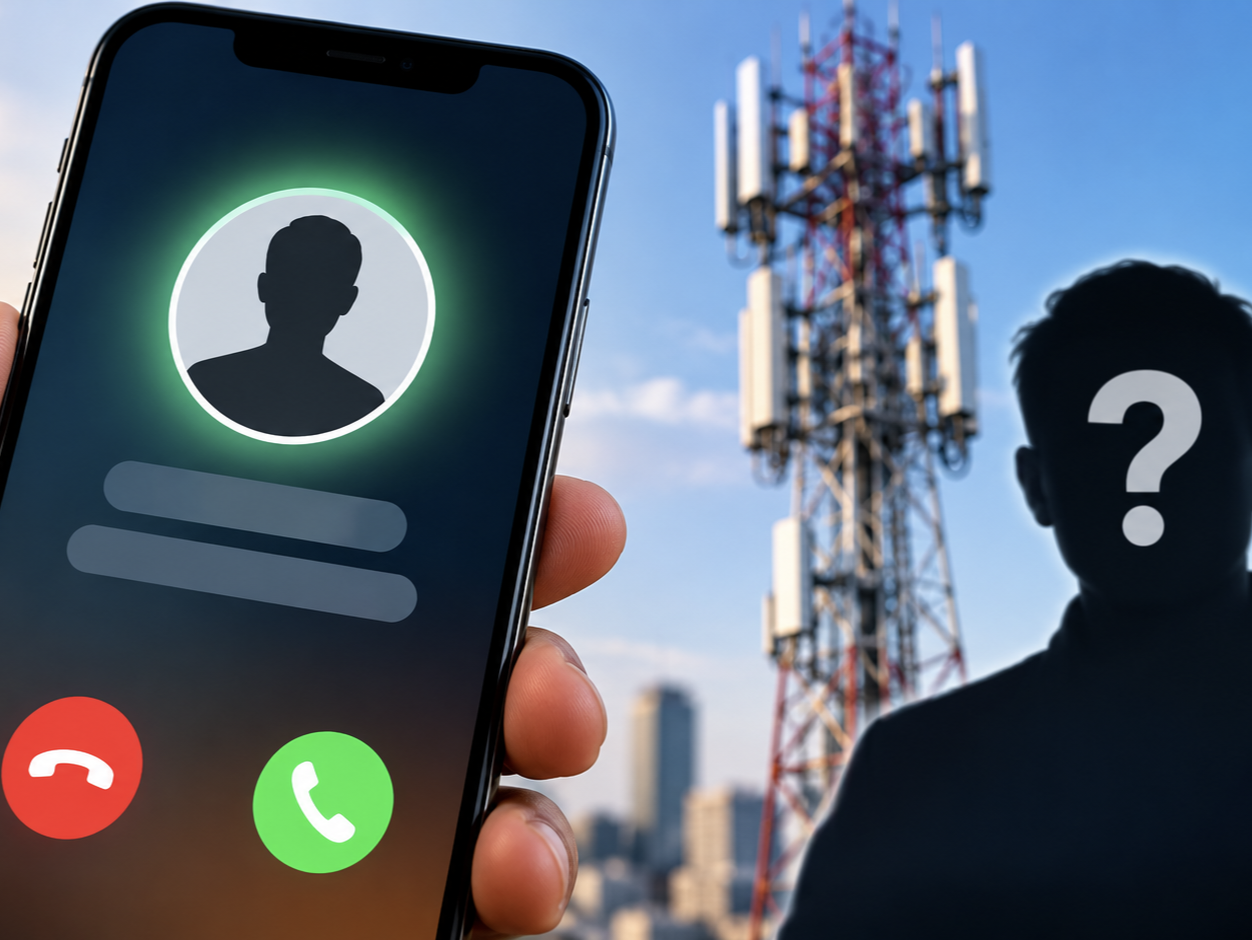
Caller ID Rules Change: Government Adds Registered Subscriber Names to Calling Line Identification From November 1
Key Highlights
- DoT has amended the definition of Calling Line Identification (CLI).
- The revised definition will take effect on November 1, 2026.
- Registered subscriber names are now included in the CLI framework.
- Caller identification can use telephone numbers, subscriber names or other prescribed identifiers.
Caller ID Rules to Change From November 1
The Indian government has introduced an important change to the country’s caller identification framework. The Department of Telecommunications (DoT), under the Ministry of Communications, has amended the definition of Calling Line Identification (CLI), expanding it beyond traditional telephone numbers to include registered subscriber names.
According to the official notification issued on October 13, 2026, the revised definition will come into effect on November 1, 2026.
The amendment forms part of the Unified Licence Agreement governing telecommunications service providers in India.
What Is Changing in Caller Identification?
Under the existing definition, Calling Line Identification primarily refers to identifying a caller through an assigned telephone number, IP address or another identifier prescribed by the licensing authority.
The revised definition introduces three possible forms of identification: a telecommunications identifier assigned by the service provider, the subscriber’s name recorded in the operator’s database, or another identification method specified by the government.
This means a caller’s registered name can now form part of the formal caller identification framework.
Will Every Incoming Call Show the Caller’s Name?
The amendment has raised expectations that mobile users may eventually be able to identify unknown callers using names recorded by telecom companies.
However, the notification does not explicitly state that all incoming calls must display registered subscriber names starting November 1.
It changes the legal definition of CLI rather than establishing a detailed, universal caller-name display requirement.
The actual availability of name-based caller identification on mobile phones may depend on additional implementation requirements and telecom network capabilities.
Government Directs Telecom Operators to Introduce Caller Name Display
A separate DoT circular dated October 13 provides further clarity on the rollout. It directs telecom service providers to introduce the Calling Name Presentation (CNAP) service across all service areas from November 1, 2026, initially on 4G and newer mobile networks. The introduction of the service on 2G, 3G and traditional telephone networks will be considered separately.
Under the new arrangement, incoming calls will carry two identification fields: the caller’s phone number and a name. If the caller’s number is saved in the recipient’s contacts, the saved name will take priority. For unsaved domestic numbers, the name recorded with the originating telecom operator will be displayed.
International calls from unsaved numbers will carry the label “International Call.”
The service is intended to make unknown callers easier to identify and could help users assess potentially suspicious calls. However, caller-name display alone cannot guarantee protection against scams or fraudulent calls.
The circular also provides for verified preferred names for eligible business connections and exceptions for subscribers using the Calling Line Identification Restriction (CLIR) facility. Telecom operators must establish mechanisms for addressing customer complaints related to the service.
The November 1 deadline therefore marks more than a change in terminology: the government has also directed operators to introduce caller-name presentation on supported networks.