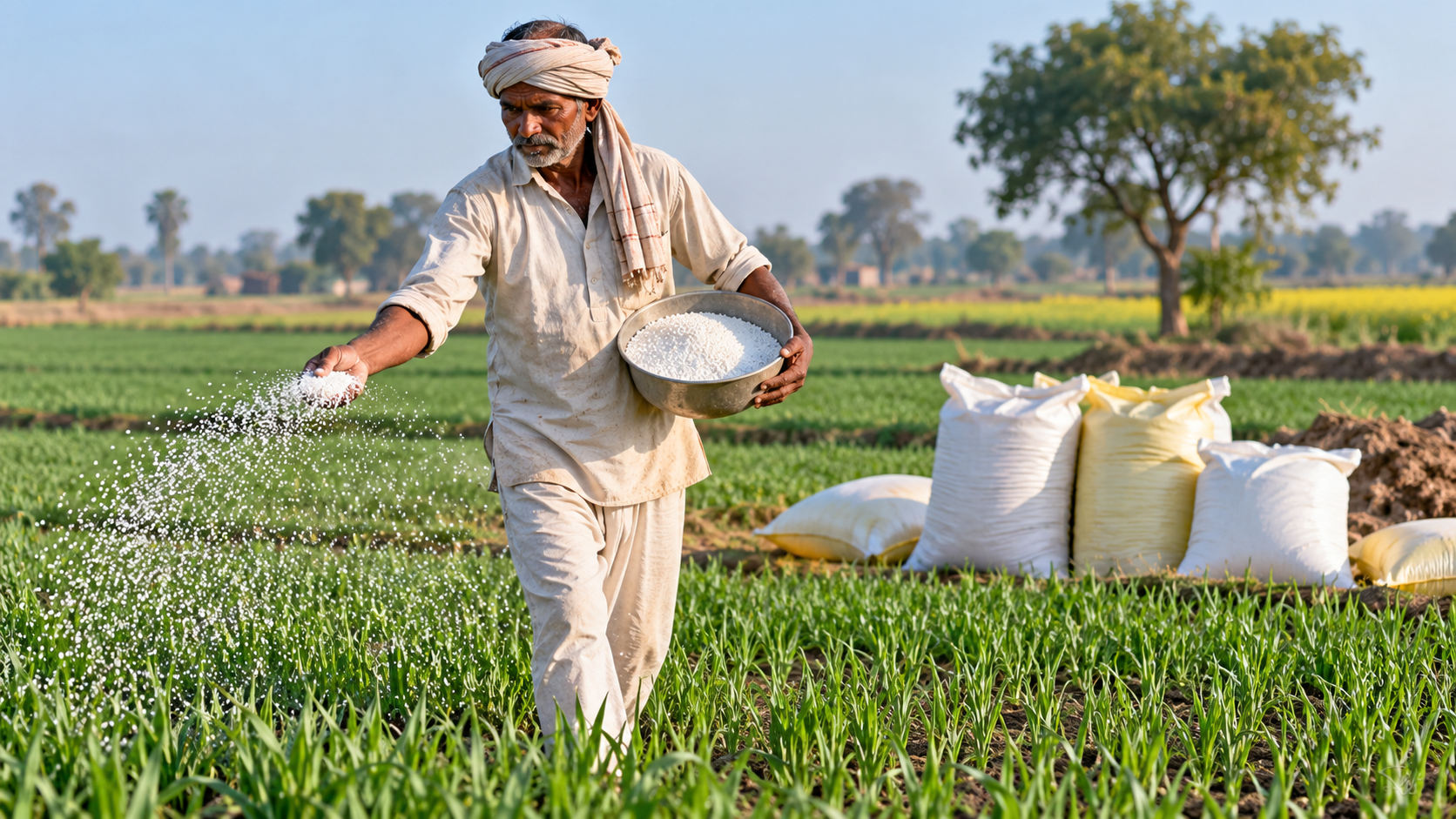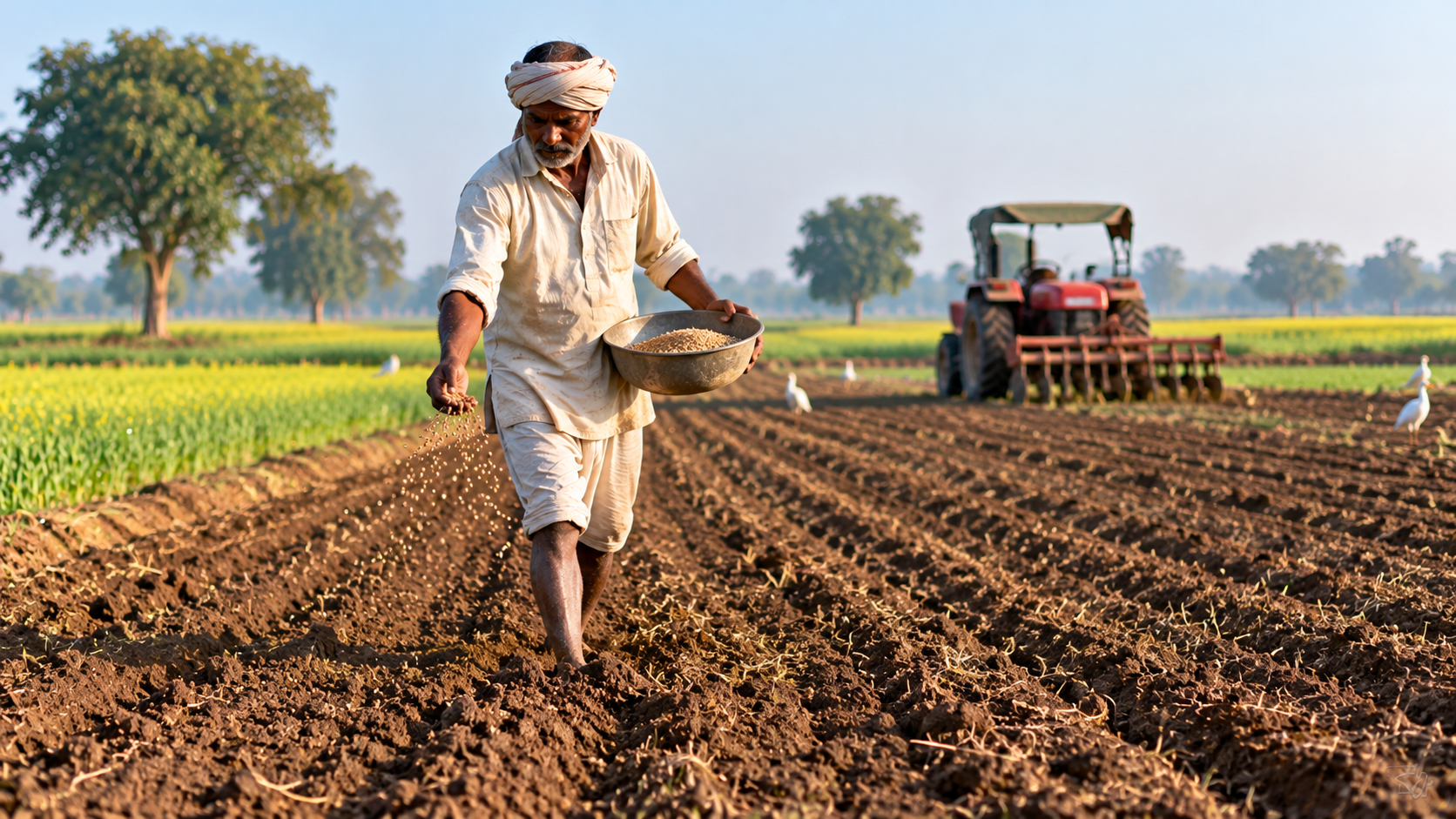
India’s rabi sowing area reached 18.8 million hectares as of October 25, down 36% year-on-year, as delayed field preparation and weather conditions affected planting progress.
India’s rabi sowing season has started at a slower pace, with the area planted reaching 18.8 million hectares as of October 25, 2026. This represents a decline of 36% compared with the corresponding period last year, according to the newspaper report.
The delay has affected several major winter crops, including wheat, pulses and oilseeds. The progress of sowing during the coming weeks will be important for determining the eventual area under cultivation and the outlook for winter crop production.
Wheat sowing was particularly behind the previous year’s pace. The reported wheat-sown area declined by 60%, while pulses coverage fell by 25% and oilseeds sowing decreased by 37%.
The report attributed the slow start partly to weather conditions and the timing of agricultural operations. Farmers typically begin planting winter crops after the monsoon season, with sowing schedules influenced by soil moisture, temperatures and the availability of suitable field conditions.
Agricultural experts monitor early sowing figures because delays can affect crop development and harvesting schedules. However, the initial figures do not by themselves determine the final harvest, as planting activity can accelerate over the remainder of the season.
Wheat is a key rabi crop in India, while pulses and oilseeds contribute to food supplies and farm incomes. Changes in the area planted can influence expectations for agricultural production, although final output also depends on weather, crop yields and other growing conditions.
The coming weeks will therefore be significant for tracking whether farmers make up the sowing shortfall. Updated crop-area figures will help provide a clearer picture of the season’s progress.