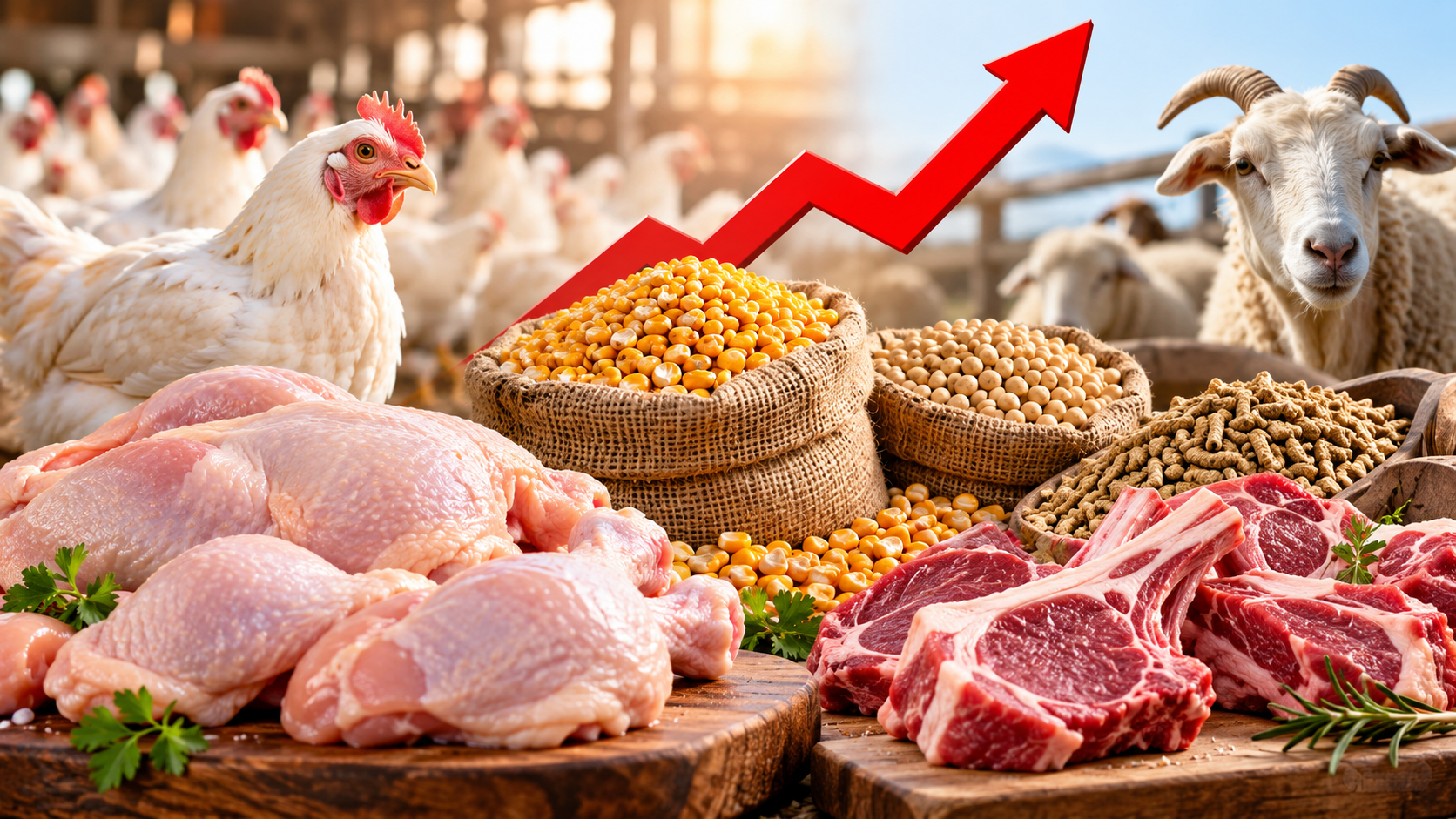
Higher production expenses could lead to costlier chicken and mutton in retail markets, putting additional pressure on household budgets.
Highlights
- Rising Feed Costs: Expensive animal feed is putting pressure on meat production costs.
- Chicken Prices: Poultry farmers face higher expenses as maize and soybean meal become costlier.
- Mutton Prices: Livestock farmers may pass increased feeding costs on to buyers.
- Consumer Impact: Households could spend more on chicken and mutton purchases.
Meat Prices Under Pressure as Rising Animal Feed Costs Threaten Retail Price Hikes
Meat prices could come under increasing pressure as rising animal feed costs make poultry and livestock farming more expensive. Higher prices of essential feed ingredients such as maize, soybean meal and other agricultural commodities are adding to production expenses, raising concerns about possible increases in retail chicken and mutton prices.
For consumers, this could mean higher spending on meat purchases, particularly if farmers and suppliers begin passing additional production costs along the supply chain.
Why Are Animal Feed Costs Rising?
Animal feed represents a major portion of the overall cost of raising poultry and livestock. Ingredients such as maize and soybean meal are widely used in poultry feed, while livestock farmers depend on fodder, grains and other nutritional supplements.
Any increase in the prices of these ingredients directly affects farmers’ operating expenses. Transportation charges, storage costs and feed availability can also influence the final cost of production.
Smaller poultry and livestock farmers may face greater financial pressure because they often have limited capacity to absorb sustained increases in input costs.
Chicken and Mutton Prices May Increase
Chicken prices are particularly sensitive to changes in feed costs because poultry farming depends heavily on commercially prepared feed.
When feed becomes more expensive, poultry producers may need to increase selling prices to maintain profitability. However, the extent of any retail price increase depends on market demand, production volumes and competition.
Mutton prices may also face upward pressure as livestock farmers deal with higher feeding and maintenance expenses. Unlike poultry, livestock production generally involves longer rearing periods, meaning changes in input costs can affect prices over an extended period.
What Does This Mean for Consumers?
Higher meat prices could put additional pressure on household food budgets, especially for families that regularly consume chicken and mutton.
Restaurants, hotels and food businesses may also experience increased procurement costs. Some businesses could respond by adjusting menu prices or reducing profit margins.
However, rising animal feed costs do not automatically translate into immediate retail price increases. Local supply conditions, seasonal demand and competition among sellers play important roles.
Will Meat Prices Continue to Rise?
The future direction of meat prices will largely depend on feed ingredient prices, agricultural production, transportation expenses and livestock availability.
Improved feed supplies and stable agricultural commodity prices could help ease production costs. Conversely, sustained increases in feed prices may eventually lead to higher retail meat prices.
For now, consumers and meat suppliers will be watching feed markets closely for signs of further price pressure.
Note: This is a general market-explainer story. Specific October 2026 price increases and current retail rates have not been independently verified.