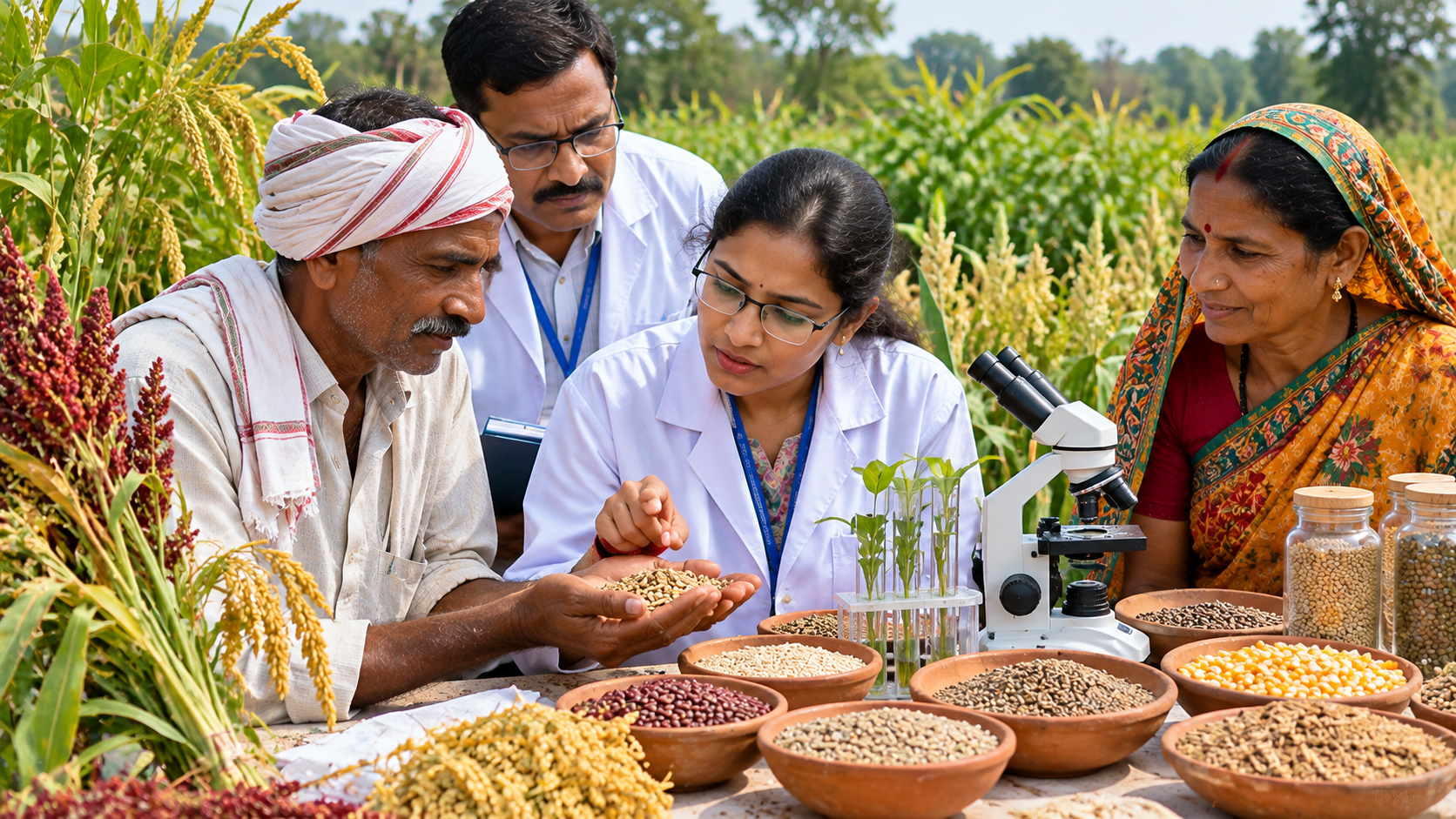
Principal Secretary to the Prime Minister P K Mishra has called for linking farmers’ traditional knowledge with scientific research, quality seed systems and wider markets. He also stressed that farmers conserving traditional crop varieties should receive sustained economic benefits, rather than only recognition through awards.
New Delhi, November 12 — Principal Secretary to the Prime Minister P K Mishra has called for greater efforts to protect India’s agricultural biodiversity while ensuring sustainable economic returns for farmers who conserve traditional crop varieties.
Addressing the 22nd Foundation Day of the Protection of Plant Varieties and Farmers’ Rights Authority (PPVFRA) and the Plant Genome Saviour Award Ceremony, Mishra said farmers should be recognised as both custodians and innovators of India’s agricultural biodiversity.
He stressed the need to connect their traditional knowledge with scientific research, seed systems and market opportunities.
Farmers need sustained economic benefits
Mishra said recognition alone would not be enough to encourage farmers to preserve traditional crop varieties.
“An award honours a farmer once; a seed chain, a market and a fair share of benefits sustain the farmer every season,” he said.
He called for stronger community seed banks and field gene banks, along with greater integration of traditional agricultural knowledge with modern scientific research.
Farmers’ varieties should also be connected with quality seed systems, Farmer Producer Organisations (FPOs) and larger markets.
Agricultural biodiversity vital for climate resilience
Mishra said India’s agricultural biodiversity plays an important role in developing crop varieties capable of dealing with climate change, water stress, pests and diseases.
India has 22 agro-biodiversity hotspots. He highlighted Koraput in Odisha, which was recognised by the FAO in 2012 as a Globally Important Agricultural Heritage System, as an example of community-led conservation.
Mishra also said farmer entrepreneurship should be promoted and benefit-sharing mechanisms should be fair and transparent.
India has world’s second-largest National Genebank
Mishra highlighted that the National Genebank at ICAR-NBPGR is the second-largest in the world.
Around 3,000 climate-resilient crop varieties have also been developed under the National Agricultural Research System.
He said geographical indications could create additional economic opportunities for distinctive agricultural products.
Nearly half of registered varieties belong to farmers
The event also marked 25 years of the Protection of Plant Varieties and Farmers’ Rights Act, 2001.
Mishra said the legislation balances plant breeders’ rights with recognition of farmers as conservers, cultivators and developers of plant varieties.
According to him, nearly half of the varieties registered under PPVFRA are farmers’ varieties.
He also highlighted the importance of benefit-sharing provisions and the National Gene Fund in ensuring fair returns for communities conserving genetic resources.
Mishra said protecting agricultural diversity requires shared responsibility among farmers, scientists, universities, industry, governments and society, with farmers recognised not only as participants in agricultural transformation but also as contributors and beneficiaries.