
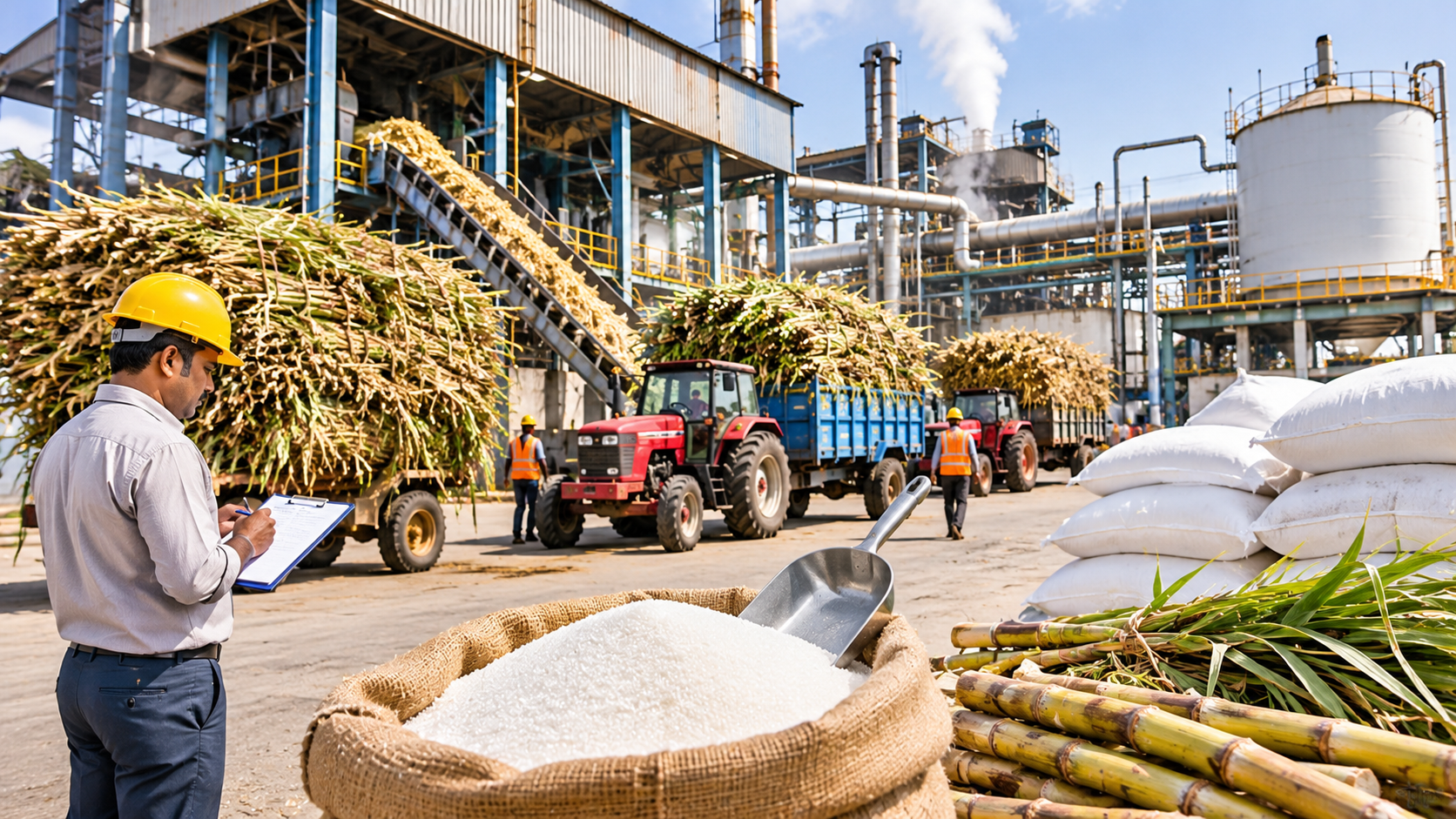
Indian sugar mills could see operating margins shrink by 140-160 basis points to around 6% this fiscal, according to Crisil Ratings. Restrictions on ethanol production from sugar-based feedstocks, higher sugarcane costs and rising borrowing requirements are expected to pressure profitability.
New Delhi, November 10 — Indian sugar mills are facing increasing pressure on profitability, with operating margins expected to contract by 140-160 basis points to around 6% this fiscal, according to Crisil Ratings.
The decline is expected despite a projected 4-5% increase in operating income, as firm sugar prices and steady demand may not be enough to offset an unfavourable product mix, higher input costs and increased interest expenses.
Crisil’s analysis covered 55 sugar mills accounting for nearly one-fourth of India’s sugar production in the previous season.
Ethanol restrictions hit sugar mills
One of the biggest pressures comes from changes in the ethanol production framework.
For Ethanol Supply Year 2027, ethanol production from sugarcane-based feedstocks has effectively been restricted to C-heavy molasses, limiting the ability of mills to divert sugar towards higher-margin ethanol production.
In recent years, nearly 10% of gross sugar output was routinely diverted towards ethanol, according to Crisil.
The reduction in higher-margin ethanol volumes means mills will become more dependent on sugar and extra neutral alcohol (ENA) sales.
Crisil said higher sugar prices would not fully compensate for the loss of ethanol earnings and rising cane costs.
Sugarcane FRP rises to ₹365 per quintal
Input costs are also increasing.
The Centre has raised the fair and remunerative price (FRP) of sugarcane by about 3% to ₹365 per quintal for sugar season 2027.
Any increase in Uttar Pradesh’s State Advisory Price could add further pressure on mills.
Meanwhile, sugar exports have been restricted following limited export permissions last season, reducing the industry’s ability to take advantage of overseas markets.
Gross sugar production is expected to decline to around 29 million tonnes in sugar season 2027 from 31.1 million tonnes a year earlier, largely because of weather-related concerns affecting cane yields in major producing states.
India allows 1 million tonnes of sugar imports
With domestic consumption expected to broadly match production, the country’s sugar supply-demand balance is likely to remain tight.
The government has permitted imports of 1 million tonnes of sugar between August and December 2026, marking India’s return to sugar imports after nearly a decade.
The additional supply is expected to prevent a significant rise in domestic sugar prices.
Borrowings could increase
Pressure on sugar mills could extend beyond operating margins.
Higher sugar prices increase the value of inventories and consequently raise working-capital requirements, which could push up borrowings and interest costs.
Crisil expects interest coverage for the sugar mills it rates to decline to around 2.7 times this fiscal from 3.7 times last fiscal.
Mills with high debt repayments and limited financial flexibility could face greater refinancing risks.
The industry’s outlook for fiscal 2028 will depend heavily on sugar prices, cane costs, ethanol pricing and monsoon performance, which will determine how quickly profitability recovers and the extent of credit pressure across the sector.