In 2025, the global wind industry recorded a historic 165 GW of new capacity, marking a 40% year-on-year increase and taking total installed capacity to 1,299 GW across 138 countries. According to the Global Wind Report 2026, onshore wind dominated additions with 155.3 GW (+42%), while offshore installations reached 9.3 GW (+16%), pushing cumulative offshore capacity to 92.3 GW, close to the 100 GW milestone. Asia led growth with nearly 80% of new installations (around 131 GW), driven primarily by China (120.5 GW) and India (6.3 GW). Europe added 19.1 GW, surpassing 300 GW total capacity, while North America contributed 7.3 GW. The top five markets accounted for 86% of global additions.
Over the 2026–2030 period, close to 969 GW of new capacity is projected to be installed, although regulatory bottlenecks and grid limitations continue to pose significant challenges to further expansion.
The global wind industry achieved a historic milestone in 2025, installing a record 165 GW of new capacity—an increase of 40% over the previous year, according to the Global Wind Energy Council (GWEC). The findings, detailed in the Global Wind Report 2026, underscore the sector’s resilience and rapid expansion amid ongoing volatility in global energy markets, including supply disruptions and surging oil and gas prices.
With Asia at the forefront, accelerated growth is driving fast-growing energy markets toward ‘electro-state’ economies, while demonstrating that wind power, when deployed at scale, can compete effectively with all major energy sources—from coal to nuclear.
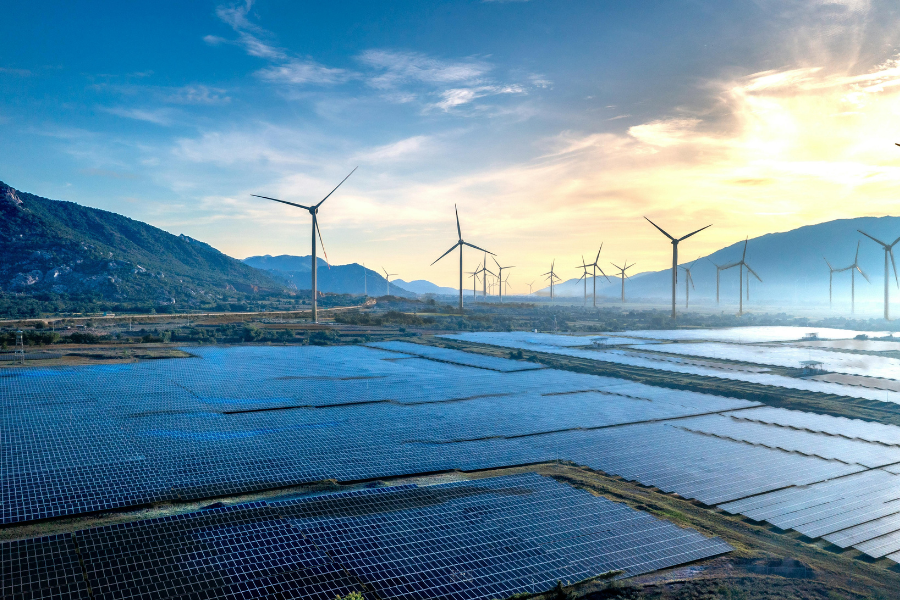
As the global energy transition accelerates, wind energy is emerging as a key driver of clean and reliable power generation. By harnessing the natural movement of air, it provides a sustainable and virtually limitless source of electricity that meets current needs without compromising the environment. In the face of rising climate concerns and the push for decarbonisation, wind power stands out for its environmental as well as economic and social benefits. In addition to delivering clean energy, it enhances energy security, generates employment, and drives technological innovation.
Global capacity expansion
The report highlights that by the close of 2025, global wind power capacity had climbed to 1,299 GW, with 138 countries incorporating wind energy into their electricity systems. Last year delivered record growth, with 155.3 GW of new onshore wind capacity (up 42%) and an additional 9.3 GW of offshore wind installations (up 16%).
This growth highlights wind power’s increasingly central role in the global energy transition, offering a resilient, reliable, cost-effective, and domestically sourced alternative to fossil fuels at a time of heightened economic uncertainty.
Around 9.2 GW of new offshore wind capacity was connected to grids globally in 2025, lifting total installed capacity to 92.3 GW and bringing the sector close to the 100 GW milestone. China led additions with 6.6 GW, while Europe brought nearly 2 GW online, including over 1 GW from the UK alone.
Asia continued to dominate the global wind landscape, accounting for 131 GW of new installations—nearly 80% of the global total. This surge was led by China and India, which together added more than 126 GW of capacity during the year. China alone contributed over 120 GW, reinforcing its position as the world’s largest wind energy market. India also delivered a strong performance, nearly doubling its annual installations to a record 6.3 GW in 2025, up from 3.4 GW in 2024—an impressive 86% increase, followed by Germany (5.2 GW) and Brazil (2.3 GW).
Beyond Asia, other regions also recorded significant progress. Europe surpassed the 300 GW mark in total installed wind capacity, adding 19.1 GW of new capacity in 2025—its second-highest annual addition and a 16% increase compared to the previous year. Growth in key markets such as Germany and Turkey played a crucial role in this expansion.
Within the European Union, the EU-27 bloc installed 15.1 GW, reflecting a 17% rise year-on-year, however, this still falls short of the pace required to meet the bloc’s 2030 climate and energy targets.
Leading regions in new wind capacity additions
| Region | 2025 | 2024 | 2023 | 2022 | 2021 |
| Asia-Pacific | 131.8 | 88.3 | 82.9 | 43.2 | 55.1 |
| Europe | 19.1 | 16.6 | 18.2 | 19.5 | 18 |
| North America | 7.3 | 5.4 | 8.1 | 9.6 | 13.4 |
| LatAm & Caribbean | 3.7 | 5 | 6.3 | 5.2 | 5.8 |
| Africa & Middle East | 2.6 | 2 | 1 | 0.3 | 1.7 |
Source: Global Wind Energy Council; figures in GW
Emerging regions across Africa and the Middle East also contributed notable volumes, defying expectations and demonstrating growing interest in wind energy as part of broader diversification strategies.
Africa and the Middle East recorded another strong year of wind installations in 2025, led by renewed expansion in South Africa and exceptional growth in Saudi Arabia. In a notable development, the 1,500 MW Dawadmi wind farm in Saudi Arabia achieved a global benchmark by becoming the lowest-cost wind project in 2025, at just US$ 1.338/kWh. With new manufacturing facilities planned in Saudi Arabia and Oman, the Middle East is projected to add over 18 GW of onshore wind capacity between 2026 and 2030.
In contrast, Latin America and the Caribbean was the only region to register a decline in annual additions during 2025. In Brazil, which installed 2.3 GW last year, new capacity additions have slowed, largely due to weaker electricity demand and rising curtailment.
A significant concentration of growth was observed among the world’s leading wind markets. According to industry sources, the top five countries—China, the United States, India, Germany, and Brazil—collectively accounted for 86% of all new capacity additions in 2025. These countries together account for nearly 75% of global installed wind capacity, underscoring the critical role of supportive policies, large-scale investment, and robust infrastructure in accelerating deployment and shaping the sector’s future.
Top five countries leading in new wind capacity additions in 2025
| Country | Annual installations (GW) | Total capacity (GW) |
| China | 120.5 | 640.5 |
| USA | 6.9 | 161.2 |
| India | 6.3 | 54.5 |
| Germany | 5.7 | 77.7 |
| Brazil | 2.3 | 36 |
Source: Global Wind Energy Council
The above data shows that China overwhelmingly dominates global wind capacity additions, installing 120.5 GW in a single year and accounting for the vast majority of new growth among the top five markets. The United States, India, Germany, and Brazil add comparatively smaller but still significant volumes, ranging between 2.3 GW and 6.9 GW annually, reflecting steady expansion in mature and emerging markets. In terms of total installed capacity, China also leads by a wide margin, followed by the United States, Germany, India, and Brazil.
The evolving global wind landscape
Looking ahead, the outlook for wind energy remains robust. The industry is on track to potentially exceed 2 terawatts (TW) of global capacity by 2030, a milestone that reflects sustained momentum and increasing demand for clean energy.
Projections from GWEC Market Intelligence indicate that approximately 969 GW of new wind capacity will be added globally between 2026 and 2030, averaging 194 GW annually. This represents a compound annual growth rate (CAGR) of 5.2% over the period. While China is expected to contribute around 63% of new installations in 2026, the market is anticipated to diversify significantly by the end of the decade.
Rapid expansion in regions such as Southeast Asia, Central Asia, Africa, and the Middle East is expected to shift the balance, with more than half of global growth projected to come from markets outside China by 2030. Notably, global wind capacity is expected to cross the 2 TW milestone as early as 2029, just six years after reaching 1 TW in 2023, highlighting one of the fastest expansions in the global energy sector.
India is expected to play a pivotal role, supported by its ambitious target of achieving 500 GW of non-fossil fuel capacity by the end of the decade. In 2025, India added the third-highest wind capacity surpassing Germany and trailing the United States.
However, the GWEC noted that while wind industry growth is gaining momentum, global progress remains uneven and insufficient to meet the target of tripling renewable capacity by 2030. It identified regulatory bottlenecks and delays in grid expansion as key obstacles holding back much-needed projects worldwide. However, swift and targeted policy action to address these challenges could unlock a vast pipeline of projects ready for investment.
Recently, GWEC unveiled its Wind Action Plan to Break the Cycle of Energy Crises, setting out urgent policy steps for governments to speed up wind energy deployment and bolster energy resilience. The plan calls for faster permitting, removal of grid bottlenecks, increased financing, expanded electrification, and the scaling up of supply chains.
Conclusion
The global wind industry’s record growth in 2025 underscores its central role in the energy transition, driven largely by Asia’s rapid expansion and strong performance in key markets. However, uneven regional progress and persistent policy and grid bottlenecks highlight the challenges ahead. Achieving future targets will depend on faster permitting, infrastructure upgrades, and sustained investment. With the right policy support, the sector holds significant potential to scale further and accelerate the shift toward a more resilient, low-carbon energy system.
Read more
Powering the transition: India’s renewable surge amid rising energy demand
FAQs
- What was the global wind capacity addition in 2025?
In 2025, the global wind industry added a record 165 GW of new capacity, marking a 40% increase compared to the previous year. - Which region led wind energy growth in 2025?
Asia dominated global wind growth, accounting for nearly 80% of new installations, driven mainly by China and India. - How much offshore wind capacity was added in 2025?
Around 9.2–9.3 GW of new offshore wind capacity was added globally, bringing total offshore installations close to 100 GW. - Which countries contributed the most to new wind installations?
The top contributors were China, the United States, India, Germany, and Brazil, collectively accounting for about 86% of new capacity additions. - What are the key challenges facing wind energy growth?
Major challenges include regulatory delays, slow grid expansion, financing constraints, and uneven policy support across regions, which hinder faster deployment.