
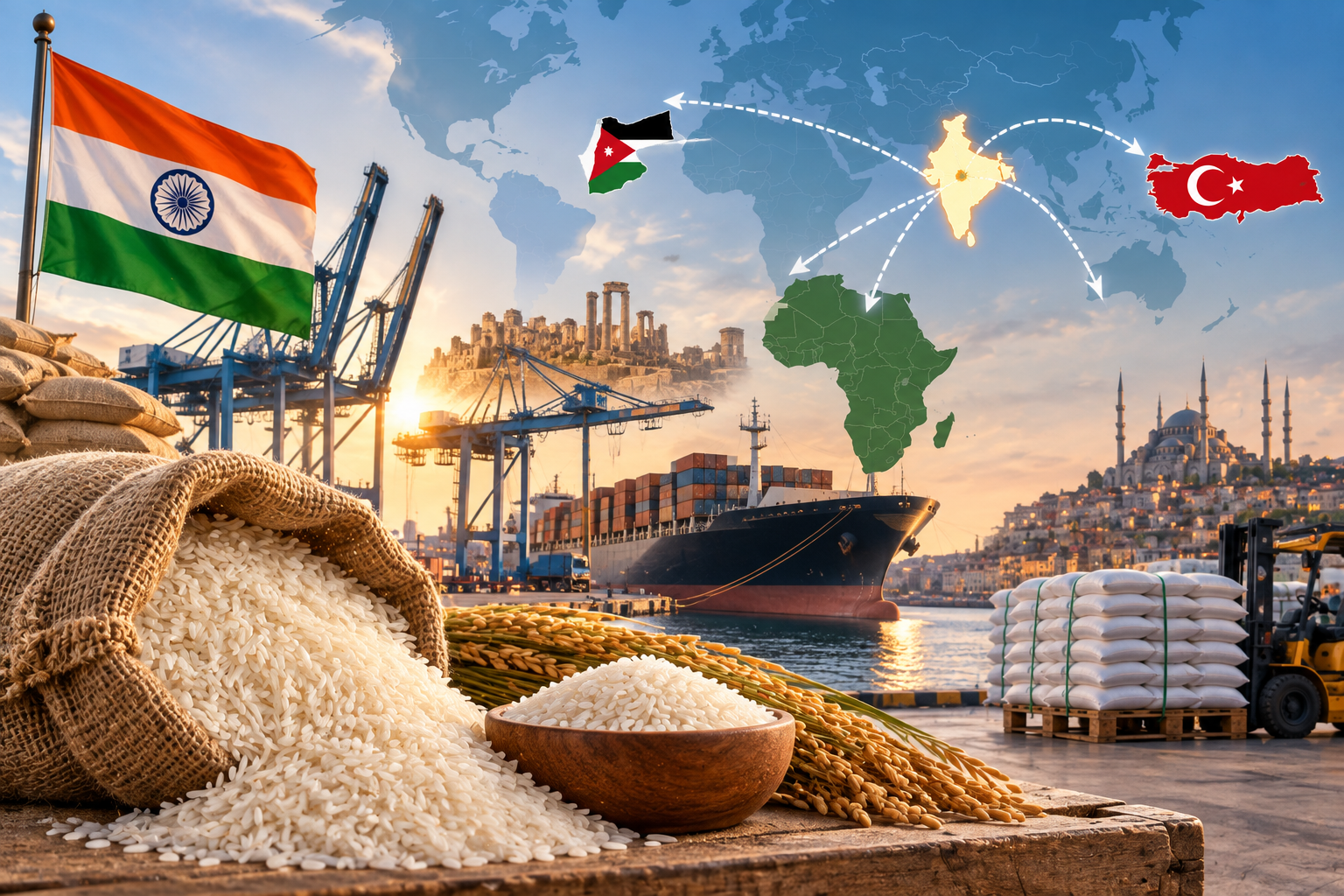
Indian rice exporters are finding strong growth beyond traditional markets, with shipments to Jordan jumping nearly eight-fold and basmati exports to Turkey doubling. Highlights New Delhi: India’s rice exporters are increasingly looking beyond their traditional overseas markets as new destinations emerge as significant growth opportunities. Shipments to Jordan have jumped nearly eight-fold, while India’s basmati rice exports to Turkey have doubled, according to a release issued ahead of the Bharat International Rice Conference (BIRC) 2026. The trend suggests that some of the fastest-growing opportunities for Indian rice exporters may come from markets that are not currently among the world’s largest rice importers. The global opportunity is also expected to expand considerably over the next decade. According to projections cited from the OECD-FAO Agricultural Outlook 2026-2035, global rice trade could increase by around 22 million tonnes to roughly 81 million tonnes by 2035. Africa Could Become Bigger Rice Market Africa is expected to emerge as an increasingly important destination. Its share of global rice imports could increase from around 35% currently to nearly 45% by 2035, potentially opening a multi-billion-dollar opportunity for exporters. Dev Garg, Vice-President of the Indian Rice Exporters Federation (IREF), said exporters need to look beyond simply targeting countries with the largest import volumes. Markets such as Jordan and Turkey highlight this changing strategy. The sharp increase in shipments to Jordan may not be entirely driven by domestic consumption. Shifting regional trade routes following disruptions to direct trade with Iran have increased Jordan’s importance as a distribution hub and alternative trade corridor. India Exports Rice to Over 170 Countries India already has a wide global footprint and currently exports rice to more than 170 countries, although a significant portion of shipments remains concentrated in established destinations. Between November 2025 and March 2026, India’s exports to 26 priority markets identified at BIRC 2025 stood at approximately Rs 23,476 crore, covering around 4.79 million tonnes of rice. This was 5.6% higher than the corresponding three-year average. The upcoming BIRC 2026 will examine potential new markets using factors such as demand growth, import dependence, competition, freight costs, duties, price realisation and payment risks. The Bharat International Rice Conference 2026 is scheduled to take place at Bharat Mandapam in New Delhi from October 23 to October 25.

Brent Crude May Hit $150
FGE sees Brent crude potentially climbing to $120-$150 per barrel if prolonged Middle East disruptions remove more oil from the global market, with physical crude already trading at elevated levels.

Usha Launches Premium BLDC Fans
Usha Expands Premium Ceiling Fan Range With AeroEdge Vedika, Aranya; Prices Start at Rs 7,130

Bhu-Aadhaar for Every Land Plot
Bhu-Aadhaar for Every Land Plot: Centre Rolls Out Rs 565.5 Crore Digital Land Records Scheme

UPI Above Rs 2,000: Fee or Free?
UPI Payments Above Rs 2,000: Will Users Have to Pay a Fee? Here’s What the New Rules Say

August PPI Rises to 9.81%
August PPI Inflation Rises to 9.81% From 9.57% in July

August WPI Inflation Rises to 9.92%
August WPI Inflation Rises to 9.92%, Food and Fuel Prices Add Pressure

India-EU Auto Tariff Relief
India-EU FTA May Give Indian Carmakers Tariff Relief for Up to 4 Lakh Cars Annually

Brent Crude Tops $107
Crude Oil Jumps 3% After Fresh Strait of Hormuz Attacks, Brent Crosses $107
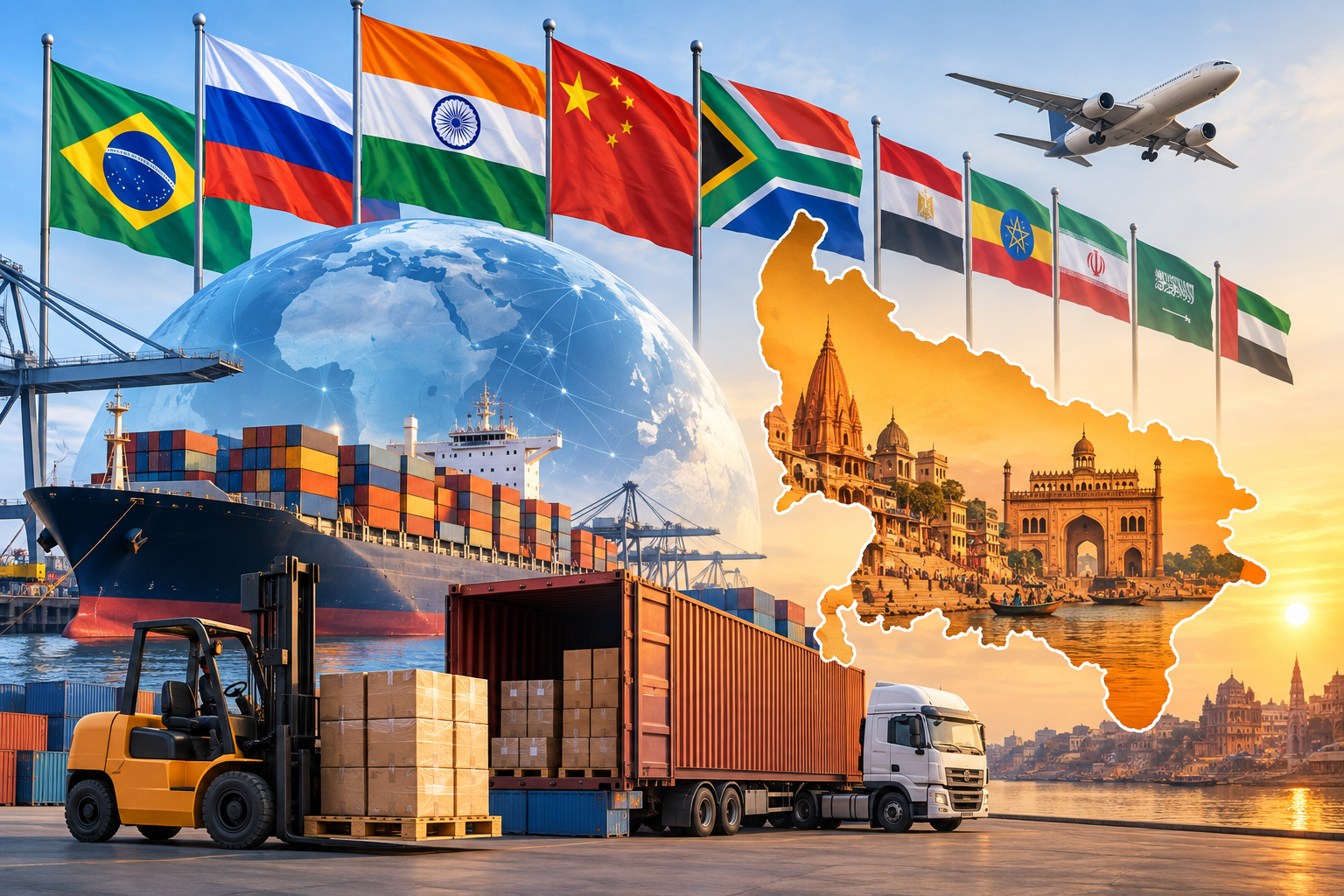
Uttar Pradesh Exports to BRICS Members and Partners Reach ₹47,484 Crore
Uttar Pradesh has recorded exports worth ₹47,484 crore to BRICS member and partner countries, highlighting the state’s expanding presence in major international markets.
