

Daily essentials may cost more soon Key Highlights Consumers could soon see another round of price increases in everyday household products as several leading FMCG companies have indicated that they may revise prices in the coming months. The expected hikes come ahead of the festive season, when consumer demand typically strengthens across the country. Companies have cited rising raw material prices, higher energy costs and increasing transportation expenses as the primary reasons behind the proposed price revisions. Persistent geopolitical tensions in West Asia have kept crude oil prices elevated, pushing up manufacturing and logistics costs for consumer goods companies. Among the companies indicating possible price increases is Hindustan Unilever Ltd. (HUL), which has said that products such as detergents and dishwashing items could witness limited price hikes in the coming quarter. Other major firms, including Asian Paints and Dodla Dairy, have also hinted at revising product prices in response to higher input costs. Some companies have already implemented price increases. Havells has raised prices of select products by nearly 8%, while Tata Consumer Products has increased salt prices by around 7%, reflecting the growing pressure on manufacturing costs. The timing is significant as the period between August and November marks India’s peak festive shopping season, covering festivals such as Raksha Bandhan, Navratri, Dussehra and Diwali. Higher consumer demand during this period generally provides companies with greater flexibility to pass on increased costs without significantly affecting sales volumes. Industry experts believe that if consumer demand remains resilient, more FMCG companies could follow with calibrated price revisions across multiple product categories, including personal care, home care and packaged food products. Meanwhile, inflation remains under close watch. Food and fuel prices have already contributed to higher retail inflation in recent months. Although inflation continues to remain within the Reserve Bank of India’s tolerance band, broader price increases across consumer goods could add fresh pressure in the coming months. The Finance Ministry has also indicated that inflationary pressures are gradually spreading beyond food items into a wider range of consumer products. Analysts believe companies will continue balancing pricing strategies with consumer demand as they navigate rising costs and competitive market conditions during the festive season.

Government Introduces New Banking Evidence Bill
125-year-old law to be replaced for digital banking Key Highlights The Central Government has introduced the Bankers’ Books Evidence Bill, 2026 in Parliament to replace the 125-year-old Bankers’ Books Evidence Act, 1891, marking a major step towards modernising India’s legal framework for banking records in the digital era. The proposed legislation seeks to update laws governing the admissibility of banking records as evidence in courts, reflecting the rapid expansion of digital banking, electronic record-keeping, online financial transactions, and the growing incidence of cyber fraud. One of the most significant provisions of the Bill is the introduction of the concept of “Special Cause.” Under this provision, courts will be able to summon bank officials or require them to produce banking records only through a written order specifying valid reasons, provided the bank is not itself a party to the case. The move is intended to protect bank employees from unnecessary litigation and repeated court appearances while ensuring access to banking records when genuinely required. The Bill also significantly expands the definition of “Bankers’ Books.” Unlike the 1891 law, which primarily focused on physical records, the new legislation includes records maintained in physical, electronic, digital, virtual, cloud-based, or any other technological format. This technology-neutral approach is designed to accommodate future advancements in banking systems and financial technologies. To strengthen the use of electronic evidence in judicial proceedings, the Bill introduces standardised certification procedures for digital banking records. Authentication will be permitted through manual, digital, or electronic signatures, allowing certified electronic records to be presented before courts in either physical or digital form. Another key feature of the proposed legislation empowers the Central Government to extend the provisions of the law to other financial institutions or classes of regulated entities, subject to prescribed conditions. This could help create a more uniform legal framework for handling digital financial records across the broader financial sector. The existing Bankers’ Books Evidence Act, 1891, was enacted during the colonial period to allow certified copies of bank ledgers to be admitted as evidence without requiring production of original books in court. However, with banking operations now largely digital, the government believes a modern legal framework is necessary to reflect current technological realities. If passed by Parliament, the new law is expected to simplify legal procedures, improve recognition of digital banking records, strengthen judicial efficiency, and support India’s rapidly evolving digital financial ecosystem.

RBI Boosts Forex Reserves
A realistic illustration of the Reserve Bank of India headquarters with rising forex reserve charts, Indian rupee and US dollar currency, symbolising RBI’s successful mobilisation of $40.82 billion to strengthen India’s foreign exchange reserves.

UPI Hits Record 23.66 Billion Transactions in July
Digital Payments Reach New High Key Highlights India’s digital payments ecosystem achieved another milestone in July 2026 as the Unified Payments Interface (UPI) recorded its highest-ever monthly transaction volume, reflecting the country’s growing reliance on cashless payments. According to data released by the National Payments Corporation of India (NPCI), UPI processed 23.66 billion transactions worth ₹29.88 trillion during July. Compared with June, transaction volume increased by 4.1%, while transaction value rose 3.3%, setting new monthly records for the platform. On an annual basis, UPI continued its rapid expansion, with transaction volume rising 22% and transaction value increasing 19% compared with July 2025. Industry experts attributed the strong growth to increasing everyday usage rather than seasonal factors. Reeju Datta, Co-founder of Cashfree Payments, noted that July lacked any major seasonal tailwinds, indicating that the increase was driven primarily by regular consumer payment behaviour. The expansion of UPI is also becoming more evident beyond metropolitan cities. Anand Kumar Bajaj, Founder, Managing Director and CEO of PayNearby, said consumers across Tier-2, Tier-3 and rural markets are increasingly using UPI for daily purchases, utility bill payments, mobile recharges and money transfers as digital payment acceptance continues to expand. Meanwhile, the Immediate Payment Service (IMPS) also reported steady growth during the month. IMPS transaction volume increased to 364 million in July from 354 million in June, while transaction value rose to ₹7.12 trillion from ₹6.77 trillion during the same period. Although IMPS transaction volume declined 24% compared with July last year, the value of transactions increased 13%, indicating continued demand for high-value instant fund transfers. The latest figures highlight India’s continued shift towards digital payments, with UPI strengthening its position as the country’s preferred payment platform across both urban and rural markets.
Centre Releases Additional ₹1.09 Lakh Crore Tax
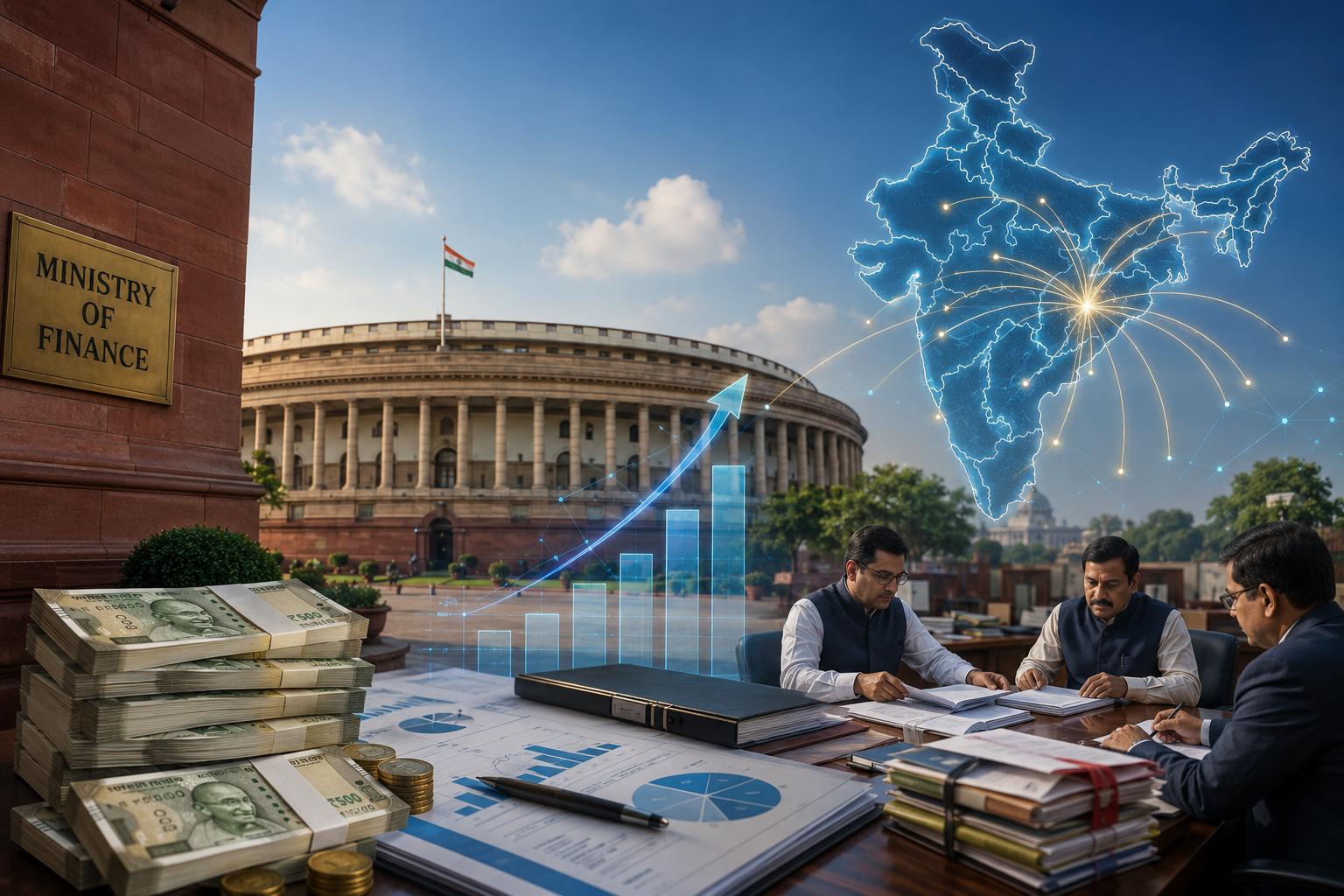
Extra Funds For States Key Highlights New Delhi, Aug 1: The Central Government has released an additional ₹1.09 lakh crore as tax devolution to state governments, providing a significant financial boost ahead of the regular monthly transfer scheduled for August 10. According to the Ministry of Finance, the additional instalment was released on August 1, 2026, and is separate from the normal monthly devolution that states receive under the existing fiscal sharing mechanism. Under the current tax devolution framework, 41% of the taxes collected by the Centre are distributed among states through 14 instalments during a financial year, helping them meet development, infrastructure and welfare expenditure. The Finance Ministry said the additional release is intended to strengthen the financial position of state governments, enabling them to accelerate public spending and implement various development programmes more effectively. The regular monthly tax devolution for August will continue as scheduled and will be released on August 10, 2026, in addition to the special allocation announced on Saturday. The move is expected to improve liquidity for state governments and support ongoing infrastructure projects, social welfare schemes and other public expenditure commitments.

Tata Motors July Sales Jump 59%; EV Volumes Hit Record 15,217 Units
Strong SUV & EV Growth Key Highlights New Delhi, Aug 1: Tata Motors Passenger Vehicles continued its strong growth momentum in July 2026, reporting a 59% year-on-year increase in total passenger vehicle sales, driven by record electric vehicle (EV) volumes, robust domestic demand and higher exports. The company sold a total of 63,760 passenger vehicles during the month, compared with 40,175 units in July 2025. Domestic sales rose 58% to 62,611 units, while exports jumped 76% to 1,149 units, reflecting healthy demand across both Indian and international markets. Electric vehicles emerged as the biggest growth driver, with Tata Motors selling a record 15,217 EVs in July, more than doubling from 7,124 units in the same month last year. The company crossed the 15,000-unit monthly EV sales milestone for the first time, while EVs accounted for nearly 24% of total passenger vehicle sales. The strong performance was supported by Tata Motors’ expanding product portfolio, including popular SUVs such as the Punch, Nexon, Harrier, Safari, Curvv and Sierra, along with its growing electric lineup featuring the Tiago EV, Tigor EV, Punch EV, Nexon EV, Curvv EV and Harrier EV. On a month-on-month basis, domestic passenger vehicle sales remained largely stable, increasing marginally from 62,076 units in June 2026 to 62,611 units in July, indicating sustained demand above the 60,000-unit mark. Tata Motors said its electric vehicle business also recorded its highest-ever VAHAN registrations, highlighting strong customer deliveries alongside increased factory dispatches. With consistent SUV demand, improving exports and a rapidly expanding EV portfolio, Tata Motors has entered the second quarter of FY27 on a strong note and remains well positioned to strengthen its presence in India’s fast-growing passenger vehicle market.

RERA Timeline Extended
Builders Get Four Months Key Highlights New Delhi: The Ministry of Housing and Urban Affairs has advised all state Real Estate Regulatory Authorities (RERAs) to provide a four-month extension for eligible real estate projects affected by supply chain disruptions caused by the ongoing conflict in West Asia. The advisory allows extension of project registration and completion timelines under the Force Majeure provisions of the Real Estate (Regulation and Development) Act. The relief will apply to projects whose completion dates fall on or after February 28, 2026. Industry bodies CREDAI and NAREDCO welcomed the government’s decision, saying it will provide much-needed relief to developers facing shortages of construction materials and rising project costs. Developers said the extension would help them complete projects without compromising quality while reducing the risk of unnecessary litigation. They also urged state RERAs to implement the advisory quickly so that both developers and homebuyers can benefit. The government said the move aims to balance the interests of all stakeholders while addressing challenges arising from global supply chain disruptions.

Coal India Output Rises
Production Hits July Record Key Highlights New Delhi: State-owned Coal India Limited (CIL) reported an 8.4% increase in coal production during July 2026, producing 50.36 million tonnes (MT) despite heavy monsoon conditions. Coal supplies rose 18.38% to 64.19 MT, marking the highest-ever coal dispatch recorded for the month of July. The company said improved inventory management and demand-responsive supply strategies helped maintain strong operational performance. Coal supply to the power sector increased 18% to 49.77 MT, while supplies to non-regulated industries rose 21% to 14.42 MT. Coal India also reported a 21.11% increase in overburden removal to 120.35 million cubic metres, an important mining activity that supports future coal production. During the April-July period of FY27, cumulative coal supplies reached 262.04 MT, setting another record for the corresponding period. The company has set a production target of 815 MT and supply target of 850 MT for the current financial year.

Auto Sales Surge In July
Maruti, Hyundai Lead Growth Key Highlights New Delhi: India’s automobile industry reported a strong performance in July 2026, with passenger vehicle sales estimated to have grown around 33% year-on-year to nearly 4.7 lakh units. The growth was led by record-breaking sales from Maruti Suzuki and Hyundai, while Tata Motors, Mahindra & Mahindra, Kia, Toyota, Honda and MG Motor also posted healthy gains. Maruti Suzuki registered its highest-ever domestic monthly passenger vehicle sales at 1,96,203 units, up 43.4% from July last year. The company said demand remained strong across hatchbacks, sedans, SUVs and CNG models, supported by GST reforms, lower interest rates and income tax relief. Hyundai Motor India also achieved its best-ever domestic monthly sales, selling 54,210 units, a growth of 23.3%. Tata Motors recorded a 58% jump in passenger vehicle sales to 62,611 units, while Mahindra’s domestic utility vehicle sales rose 20% to 60,048 units. Honda Cars India posted a 48% increase in domestic sales, Kia India grew 27.4%, Toyota Kirloskar Motor reported a 5% rise, while JSW MG Motor and Nissan also registered significant growth during the month. In the two-wheeler segment, Royal Enfield reported a 34% increase in total sales to 1,18,232 motorcycles. Domestic sales climbed 38% to 1,05,317 units, while exports rose to 12,915 units, reflecting strong demand in both domestic and overseas markets. Industry experts attribute the continued momentum to supportive government policies, improved affordability and steady consumer demand, with SUVs and alternative fuel vehicles remaining the biggest growth drivers.

India Eyes Cambodia Tech Growth
Technology exporters expand Southeast Asia presence Key Highlights India’s technology exporters are stepping up efforts to expand their presence in Cambodia, with a high-level business delegation visiting Phnom Penh to explore partnerships in electronics, software, and information and communication technology (ICT). The three-day visit, organised under the Electronics and Computer Software Export Promotion Council (ESC) in collaboration with the Embassy of India in Cambodia, brought together 12 delegates from nine leading Indian technology companies representing a wide range of advanced technology sectors. The India-Cambodia B2B Interaction on Electronics, Software and ICT attracted more than 100 Cambodian participants, including representatives from government agencies, major banks, business associations, startups, and technology firms. The event has emerged as one of the largest bilateral technology networking platforms between the two countries in recent years. The Indian delegation showcased expertise across artificial intelligence (AI), blockchain, Internet of Things (IoT), cybersecurity, fintech, agritech, electric vehicle technologies, semiconductors, drone solutions, and digital transformation services. Industry leaders highlighted India’s capability to provide end-to-end technology solutions that align with Cambodia’s growing digital economy. Senior executives from leading Cambodian financial institutions, including ABA Bank, ACLEDA Bank, Vattanac Bank, Wing Bank, and Bridge Bank, participated in discussions aimed at expanding fintech collaboration, digital banking services, cybersecurity solutions, and financial technology partnerships. According to industry estimates, Cambodia’s ICT market is expected to register double-digit annual growth, supported by internet penetration exceeding 80 percent of the population. This presents significant opportunities for Indian technology exporters looking to strengthen their footprint in Southeast Asia. India’s technology exports to Cambodia have also shown steady growth over the past five years. Technology-driven exports increased from USD 5.41 million in 2021-22 to USD 7.99 million in 2025-26, with electronic components accounting for a major share of shipments. Consumer electronics, telecom equipment, computer hardware, and software solutions continue to contribute to the expanding trade relationship. During the visit, the Indian delegation also held discussions with Cambodia’s Ministry of Posts and Telecommunications on strengthening cooperation in digital infrastructure, semiconductor development, cybersecurity, and emerging technologies. Industry representatives believe the engagement has laid the foundation for long-term collaboration between the two countries, creating new export opportunities for Indian technology companies while supporting Cambodia’s digital transformation agenda. With demand for advanced digital solutions continuing to rise across Southeast Asia, Indian firms are expected to play an increasingly important role in the region’s technology ecosystem.
