
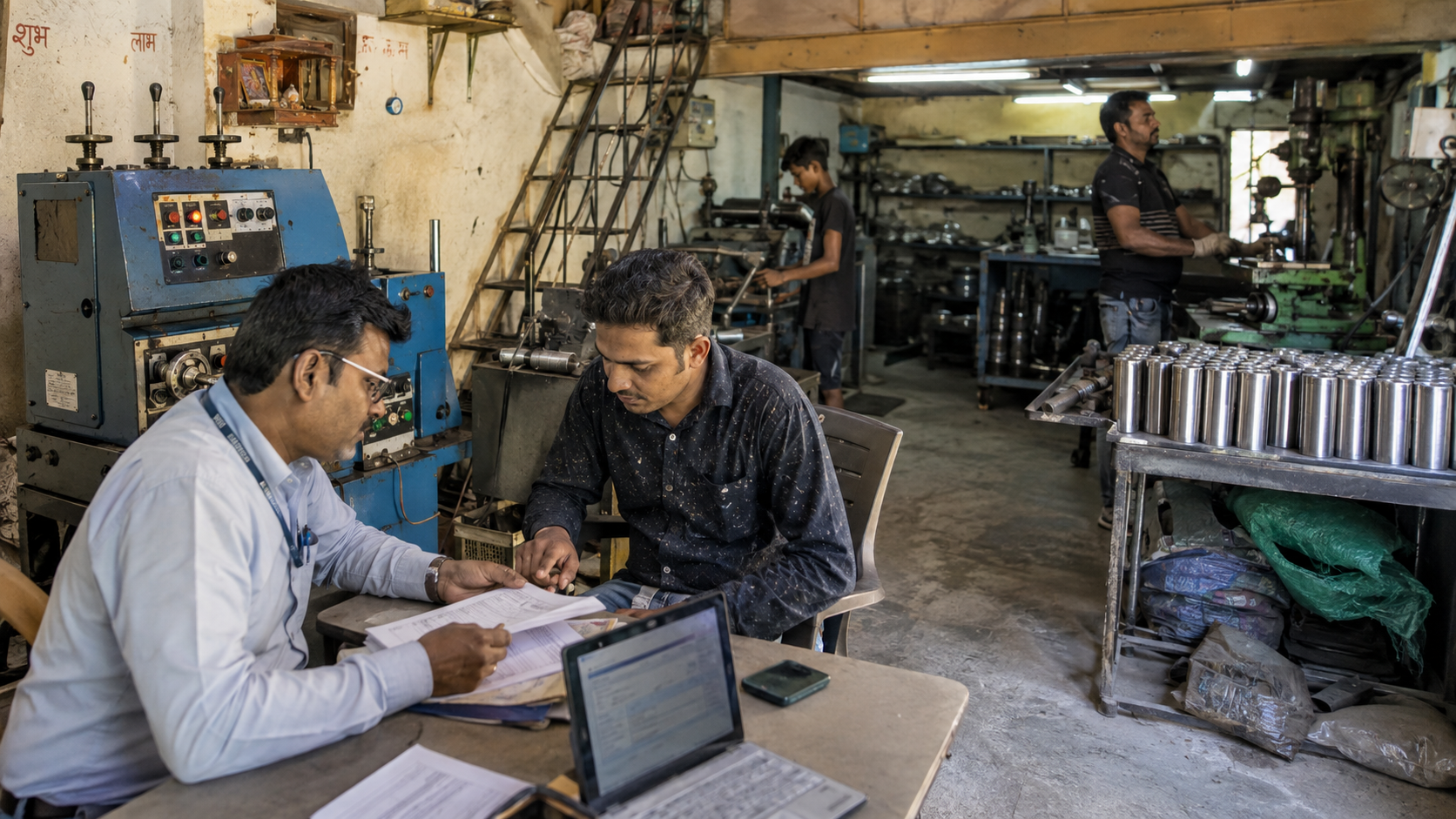
SIDBI is seeking to expand its co-lending partnership with Regional Rural Banks to improve MSME credit access across rural and semi-urban India through a digital, paperless lending platform.

Tribunal Clears ₹11,003 Crore Jio Tax Disallowance
Income Tax Appellate Tribunal deletes ₹11,003-crore tax disallowance imposed on Reliance Jio Infocomm in a major tax classification ruling.

RRB Profits Hit Record High
Regional Rural Banks post ₹10,176 crore Key Highlights New Delhi, August 25: India’s Regional Rural Banks (RRBs) delivered their strongest-ever financial performance in FY 2025-26, with combined net profit rising to a record ₹10,176 crore and total business crossing ₹13.5 lakh crore, according to the Department of Financial Services. The performance was reviewed at a meeting in Delhi chaired by the Secretary, Department of Financial Services. Representatives from all 28 RRBs, NABARD, sponsor banks, the Reserve Bank of India, SIDBI and government officials participated in the meeting. Profitability and Asset Quality Improve RRBs reported a significant improvement in profitability during the financial year. Their consolidated net profit increased from ₹6,820 crore in FY 2024-25 to ₹10,176 crore in FY 2025-26, representing growth of about 49%. The combined business of the 28 banks also crossed ₹13.5 lakh crore. According to the government, this level of business is now higher than that of some individual public sector banks. Asset quality strengthened alongside profitability. Gross Non-Performing Assets declined to an all-time low of 5.3%, while Net NPAs fell to a record low of 2.1%. The Credit-Deposit Ratio also reached an all-time high of 75.2%, indicating an increasing deployment of deposits towards lending. Financial Inclusion Remains Key Focus RRBs continued to play an important role in expanding formal banking services across rural and underserved areas. During FY 2025-26, the banks opened more than 54.98 lakh new accounts under the Pradhan Mantri Jan Dhan Yojana. The banks also achieved the prescribed targets and sub-targets under Priority Sector Lending, supporting their role in providing credit to agriculture and other underserved sections of the economy. Currently, 28 RRBs operate through a network of 22,273 branches covering around 700 districts across 26 states and three Union Territories. Digital Banking Push Ahead The Department of Financial Services has now called on RRBs to accelerate the adoption of modern banking technology and strengthen digital delivery. The government wants digital banking services to become more accessible in rural and far-flung regions while improving customer experience and operational efficiency. Particular emphasis has been placed on ensuring greater digital access for young customers and other sections of society. Sponsor banks have also been asked to support RRBs in strengthening their IT infrastructure. RRB chairpersons were encouraged to expand credit in sectors relevant to their respective regions and explore innovative lending opportunities. The government said the focus ahead will be on sustaining the improvement in RRB performance while ensuring formal banking services and government-backed financial schemes reach customers at the last mile.
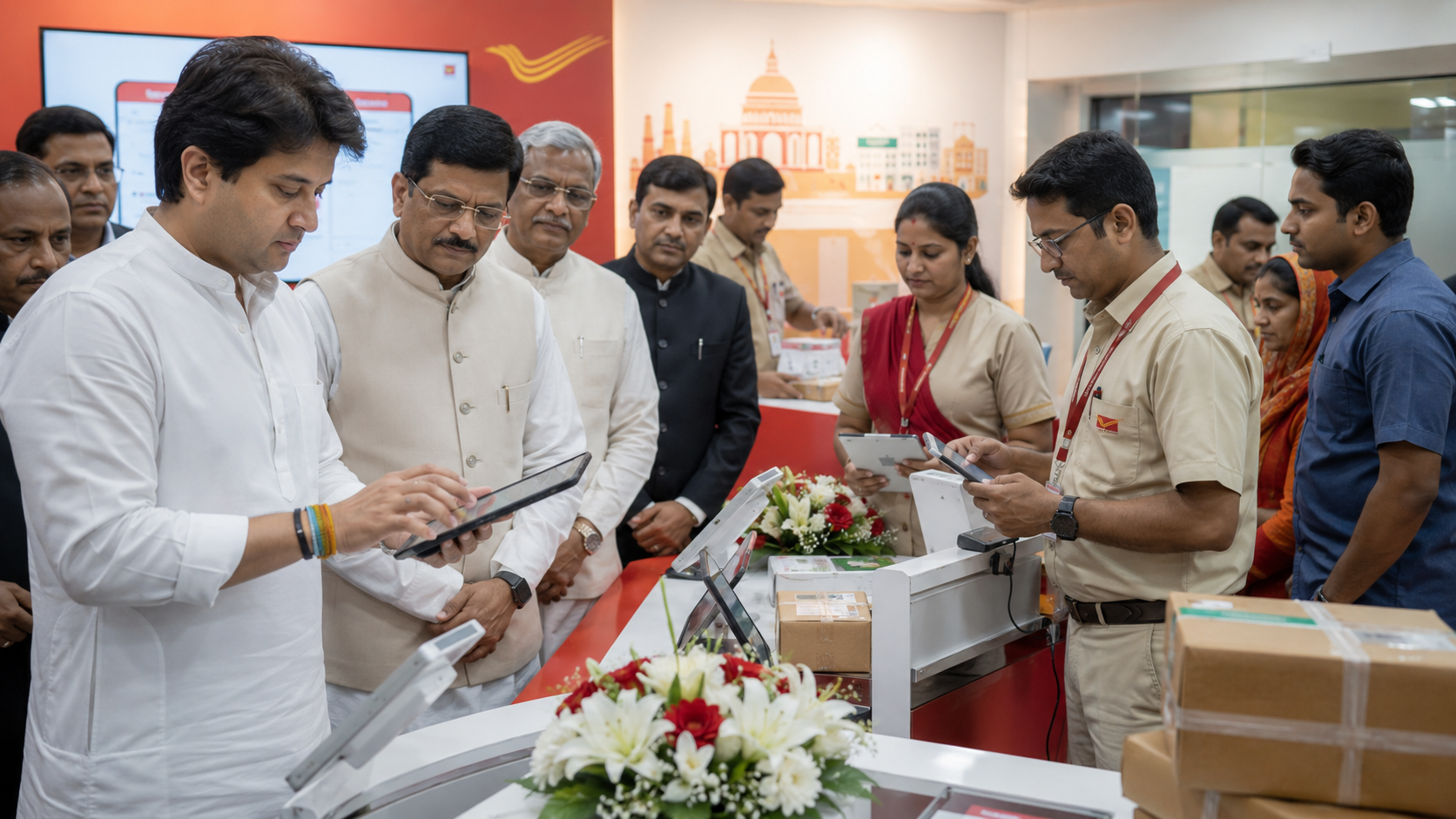
India Post Enters Digital Era
New Apps Modernise Citizen Postal Services Key Highlights: News Story: New Delhi, August 24: Union Minister for Communications and Development of North Eastern Region Jyotiraditya M. Scindia launched the Dak Mitra and Dak Sewa mobile applications and virtually inaugurated 14 renovated post offices across the country, marking another major step in India Post’s technology-led transformation. Speaking at an event organised by the Department of Posts in New Delhi, Scindia said India Post is embracing technology and innovation to meet the needs of the 21st century. He said the initiatives are aimed at making postal services simpler, faster, more accessible and more citizen-centric, while connecting the institution’s trusted legacy with modern technology. Dak Mitra empowers postal workers The Dak Mitra app has been developed to digitally empower postal workers by bringing postal, banking, insurance and citizen-centric services together on a single platform. Since its new avatar was launched in May 2025, Dak Mitra has been operational across 1.4 lakh Branch Post Offices. It has facilitated 2.45 crore domestic Speed Post and parcel bookings and contributed to the delivery of 15.09 crore postal articles. The initiative has also contributed to ₹1,102 crore in new premium collection, taking total premium collection to ₹5,431 crore. Scindia said digital transformation is enabling postal workers to take services directly to citizens instead of requiring them to visit post offices. The platform supports facilities such as savings account opening through Aadhaar-based KYC, cash withdrawals using Aadhaar biometrics and digital e-KYC, making services more convenient and accessible. Dak Sewa brings postal services to smartphones The Dak Sewa app brings multiple postal services together on a single digital platform. Since its pilot launch in June 2025, the application has recorded nearly 10 lakh downloads, while 91.34 lakh mail and parcel articles have been booked through the platform. Citizens can use Dak Sewa to track domestic and international articles, book Speed Post and parcels, access e-Money Order services, register and track complaints, locate nearby post offices and obtain PIN code information. The app also provides postal charge calculation, information on Small Savings Schemes and details of insurance services including PLI and RPLI. Dak Sewa is available in 23 Indian languages and supports digital payments through UPI, internet banking and cards. Online bill payments through SBI ePay and domestic and international booking processes have also been integrated into the platform. 14 post offices get modern makeover The government is simultaneously modernising physical post offices across the country, with Scindia emphasising that digital transformation does not reduce the importance of physical postal centres. A total of 40 post offices across 17 states have been identified for modernisation, with work already completed at 27 locations. Fourteen renovated post offices were inaugurated during the event. These are located at Patliputra in Bihar; Vasant Kunj in Delhi; Sector-56 Gurugram in Haryana; Kakurgachi in Kolkata; Vidisha and Sanchi in Madhya Pradesh; Shillong in Meghalaya; Kandivali West in Mumbai; Shankar Nagar and Ayodhya Nagar in Nagpur; Nirala Nagar, Gomti Nagar and Indira Nagar in Lucknow; and Prayagraj. The modernised facilities are designed to provide citizens with a contemporary service-centre experience while retaining the familiarity and trust associated with traditional post offices. India Post records strong revenue growth India Post is also showing stronger financial performance alongside its digital transformation. Its revenue increased from approximately ₹13,218 crore in FY 2024-25 to ₹15,296 crore in FY 2025-26, representing nearly 16% growth. In the first quarter of FY 2026-27, India Post recorded its highest-ever quarterly revenue of ₹4,008.95 crore. This marked the first time quarterly revenue crossed the ₹4,000-crore level and represented approximately 22% year-on-year growth. The government said the performance reflects India Post’s ability to combine its extensive national reach and public trust with modern technology and expanding services. Focus shifts to citizen-centric services Scindia said the success of India Post’s transformation will not be measured only through app downloads or the number of renovated post offices. Instead, its impact will be determined by how effectively the initiatives simplify the work of postal employees and make government and postal services faster, simpler, more accessible and transparent for citizens. The transformation is aligned with the vision of Viksit Bharat 2047, with India Post being positioned as a modern, trusted and technology-enabled institution. Its extensive reach across the country and direct human connection with citizens remain central to its role, while technology is expected to further expand the impact of these strengths.

Japan Investment Push Gains Momentum
Goyal Seeks Greater Japanese Institutional Capital Key Highlights: News Story: New Delhi, August 25: India-Japan investment ties gained further momentum as Union Commerce and Industry Minister Piyush Goyal held discussions in Tokyo with senior leaders of Japan’s leading financial and investment institutions to strengthen long-term capital flows and expand Japanese participation in India’s growth story. The meeting brought together senior representatives of MUFG, Development Bank of Japan (DBJ), Mizuho, Morgan Stanley, Nomura and Nippon Life. Discussions focused on India’s economic outlook, emerging investment opportunities and measures to further facilitate Japanese institutional investment. Goyal highlighted the strength and resilience of the Indian economy, noting that India recorded 7.7 per cent growth last year despite global uncertainties. He said India is working towards becoming a USD 30 trillion economy by 2047. The Minister also pointed to India’s strong banking sector, robust capital adequacy, low levels of non-performing assets, expanding middle class and rising disposable incomes as key foundations for sustained economic growth. Emerging investment opportunities Goyal highlighted significant opportunities for Japanese investors in semiconductors, artificial intelligence, data centres, renewable energy, green hydrogen, advanced manufacturing and digital infrastructure. He noted that India’s expanding renewable-energy capacity and national power grid provide a strong foundation for energy-intensive digital industries. The country’s semiconductor mission is also expected to create new manufacturing and technology opportunities. Calling Japan a trusted partner, Goyal said India is committed to becoming a global manufacturing, technology and investment hub. He also emphasised the country’s focus on intellectual property protection, high-quality talent, policy reforms and an increasingly conducive business environment. Japanese institutions expand India presence Japanese financial institutions highlighted their growing engagement with India and expressed strong confidence in its long-term growth prospects. MUFG highlighted its investment of around USD 4 billion in Shriram Finance, along with expanding interests in renewable energy and hydrogen. DBJ outlined its dedicated India strategy and growing interest in property development, venture capital and other long-term investments. Mizuho highlighted improving profitability among Japanese companies operating in India and the expansion of its operations, including its Global Capability Centre in Pune. Morgan Stanley described India as one of its most important global locations, with more than 19,000 employees, and highlighted the shift of its Indian operations towards higher-value capital markets and financial services activities. Nomura highlighted its long-standing presence in India and its role in connecting Japanese companies and global industries with Indian opportunities, including through capabilities in artificial intelligence and cybersecurity. Nippon Life emphasised the importance of long-term “patient capital” and highlighted the strong returns generated by its Indian operations. Investors seek smoother capital flows The discussions also focused on measures to facilitate greater Japanese institutional investment in India. Participants highlighted the importance of simplifying profit-repatriation processes, improving access to Indian capital markets and ensuring greater regulatory predictability for long-term investors. While Japanese institutions reiterated their positive long-term outlook on India, they noted that currency movements and certain regulatory and policy considerations can influence short-term investment decisions. Goyal welcomed the feedback and reiterated the government’s commitment to continuously improving the ease of doing business and creating a more seamless investment environment. GIFT City gains strategic importance The meeting also explored the potential of GIFT City as a gateway for international capital into India and as a platform for facilitating greater cross-border investment flows between Japan and India. Goyal stressed that India is seeking more than capital, with a focus on long-term partnerships that bring technology, innovation, manufacturing capabilities, employment and integration with global value chains. He highlighted opportunities across new and emerging sectors as well as established businesses requiring modernisation and technological upgrading. The discussions assume significance as India and Japan aim to mobilise 10 trillion yen of Japanese private investment into India over the next decade. The engagement reaffirmed the confidence of leading Japanese financial institutions in India’s long-term growth prospects and highlighted significant potential for expanding bilateral investment, technology and business linkages. The meeting marks another important step towards deepening the India-Japan economic partnership and unlocking greater flows of long-term Japanese institutional capital into India’s next phase of growth.
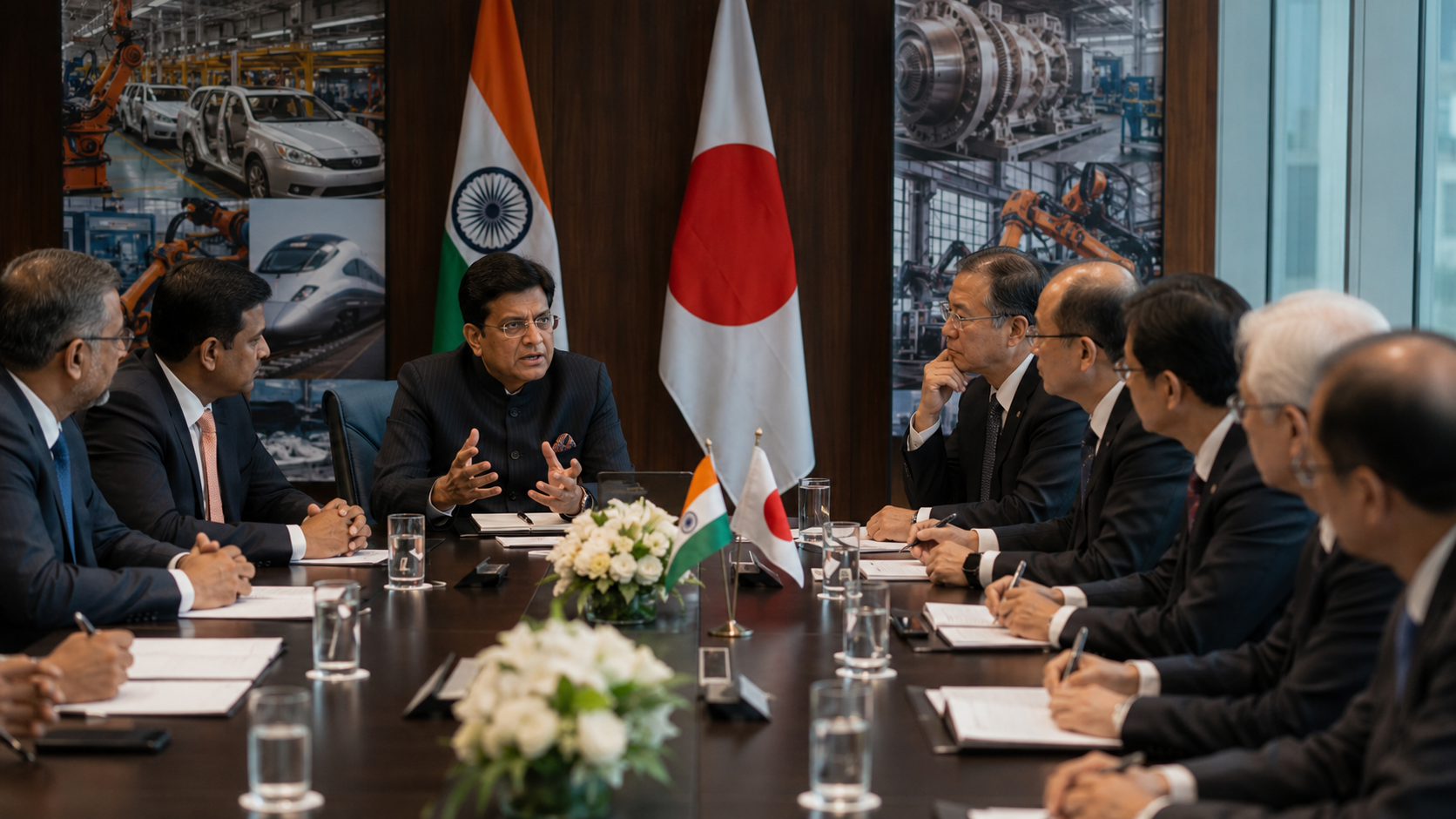
Japan Eyes India Manufacturing Opportunities
Goyal Invites Deeper Japanese Investment Key Highlights: News Story: New Delhi, August 25: India is seeking to deepen Japanese investment across its manufacturing ecosystem, with Commerce and Industry Minister Piyush Goyal inviting Japanese industry stakeholders and investors to leverage India’s growth opportunities in capital goods, machinery and automobiles. Goyal held an interaction with Japanese industry stakeholders and investors at a roundtable on the “Capital Goods, Machinery and Automotive Industry”, convened by Sumitomo Mitsui Banking Corporation (SMBC). During the discussion, Goyal highlighted India’s improving ease of doing business environment and its manufacturing-led growth as major opportunities for Japanese companies looking to expand their presence in the country. He emphasised that India’s growing manufacturing ecosystem provides opportunities across capital goods, machinery and automotive industries, supported by expanding domestic demand and the country’s broader push towards becoming a global manufacturing hub. SMBC positioned as investment bridge Goyal highlighted the strategic role of SMBC in connecting Japanese capital, technology and expertise with emerging opportunities in India. The banking institution’s engagement with Japanese businesses and investors can help facilitate stronger financial and commercial linkages between the two economies, particularly as Japanese companies explore opportunities within India’s expanding industrial ecosystem. The Minister invited SMBC and Japanese investors to take advantage of India’s growth story and establish deeper partnerships across manufacturing and related sectors. Focus on deeper economic engagement The interaction comes as India continues to strengthen its economic partnership with Japan and attract greater Japanese institutional and corporate investment. Goyal encouraged Japanese businesses to partner with India to unlock new investment opportunities, expand manufacturing capabilities, bring advanced technology and expertise, and contribute to employment and economic growth. The discussions also underline India’s broader objective of attracting long-term investment that can strengthen domestic manufacturing and integrate Indian businesses more deeply into global value chains. The latest engagement is expected to further support India-Japan economic cooperation while creating opportunities for Japanese companies to participate in India’s next phase of manufacturing-led growth.
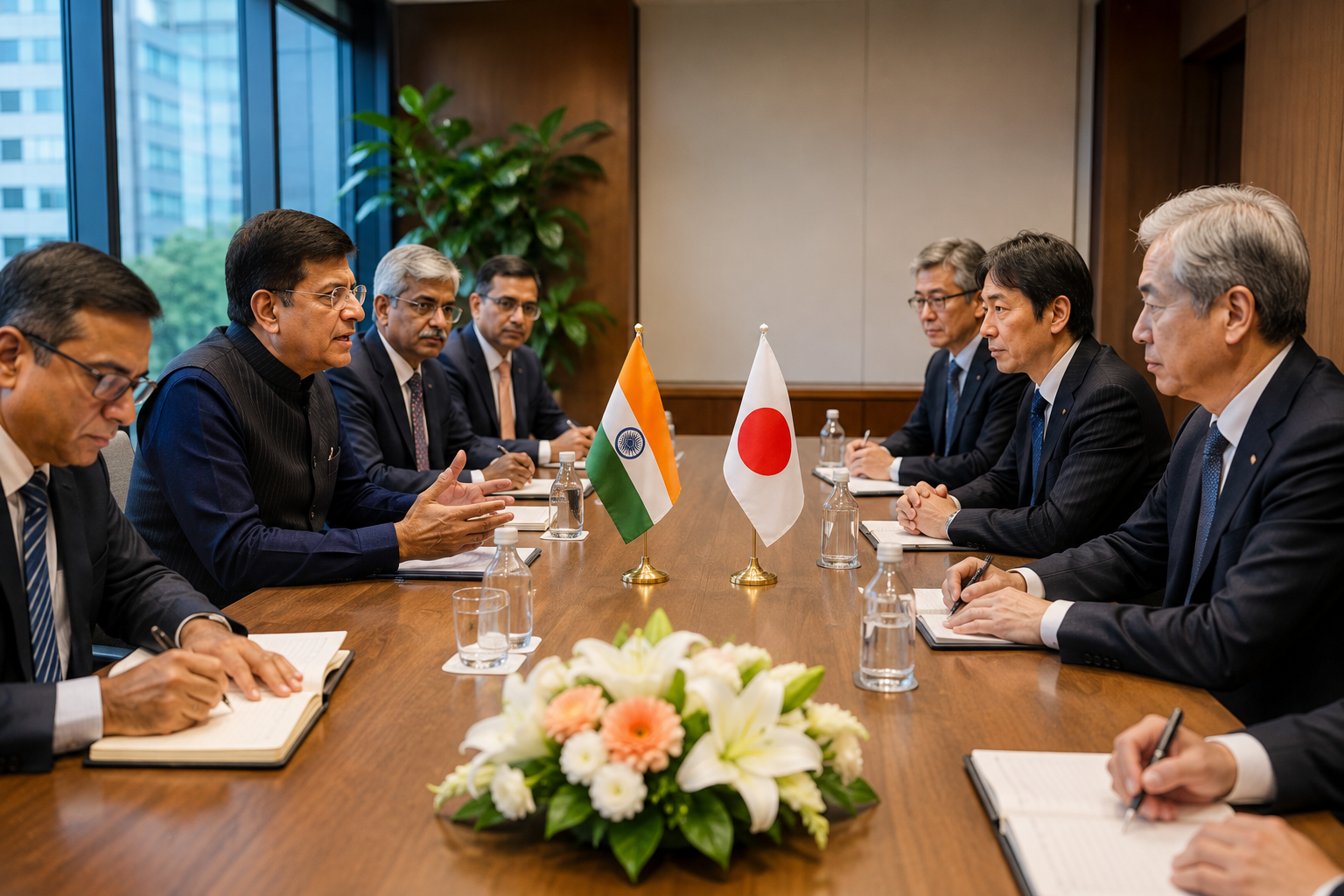
Japan Investment Push Gains Momentum
Goyal Seeks Greater Japanese Institutional Capital Key Highlights: News Story: New Delhi, August 25: India-Japan investment ties gained further momentum as Union Commerce and Industry Minister Piyush Goyal held discussions in Tokyo with senior representatives of leading Japanese financial and investment institutions, inviting greater long-term Japanese institutional capital into India. The meeting brought together senior leaders from MUFG, Development Bank of Japan (DBJ), Mizuho, Morgan Stanley, Nomura and Nippon Life. Discussions focused on India’s economic outlook, emerging investment opportunities and measures to make it easier for Japanese institutions to increase their investments in the country. Goyal highlighted the resilience of the Indian economy, noting that India recorded 7.7 per cent growth last year despite global uncertainties. He said the country is working towards becoming a USD 30 trillion economy by 2047. The Minister pointed to India’s strong banking sector, robust capital adequacy, low levels of non-performing assets, expanding middle class and rising disposable incomes as important drivers of long-term economic growth. Investment opportunities across emerging sectors Goyal highlighted significant opportunities for Japanese investors in semiconductors, artificial intelligence, data centres, renewable energy, green hydrogen, advanced manufacturing and digital infrastructure. He said India’s expanding renewable energy capacity and national power grid provide a strong foundation for energy-intensive digital industries. The India Semiconductor Mission is also creating opportunities across semiconductor manufacturing and related technology sectors. The Minister described Japan as a trusted partner in India’s ambition to become a global manufacturing, technology and investment hub. He also emphasised India’s focus on intellectual property protection, skilled talent, policy reforms and improving the overall business environment. Japanese institutions expand India focus Japanese financial institutions expressed strong confidence in India’s long-term growth prospects and outlined their expanding engagement with the country. MUFG highlighted its investment of around USD 4 billion in Shriram Finance, along with growing interests in renewable energy and hydrogen. DBJ outlined its dedicated India strategy and identified property development, venture capital and other long-term investment opportunities as areas of interest. Mizuho highlighted improving profitability among Japanese companies operating in India and the expansion of its Indian operations, including its Global Capability Centre in Pune. Morgan Stanley described India as one of its most important global locations, with more than 19,000 employees. The institution also highlighted the shift of its India operations towards higher-value capital markets and financial services activities. Nomura highlighted its long-standing presence in India and its role in connecting Japanese companies and global industries with Indian opportunities, including through technology capabilities in artificial intelligence and cybersecurity. Nippon Life emphasised the importance of long-term “patient capital” and highlighted the strong returns generated by its Indian operations. Investors seek easier capital flows The discussions also focused on measures to facilitate greater Japanese institutional investment in India. Japanese financial institutions highlighted the need to simplify processes related to profit repatriation, improve access to Indian capital markets and provide greater regulatory predictability for long-term investors. The institutions maintained a strongly positive long-term outlook on India, while noting that currency movements and certain regulatory and policy considerations can influence short-term investment decisions. Goyal welcomed the feedback and reiterated the government’s commitment to improving the ease of doing business and creating a more seamless investment environment. GIFT City emerges as investment gateway The meeting also explored the potential of GIFT City as a gateway for international capital into India and as a platform for facilitating greater cross-border investment flows between Japan and India. Goyal stressed that India is looking beyond capital alone and is seeking long-term partnerships that bring technology, innovation, manufacturing capabilities, employment and integration with global value chains. The discussions assume significance as India and Japan seek to mobilise 10 trillion yen of Japanese private investment into India over the next decade. The engagement reaffirmed Japanese financial institutions’ confidence in India’s long-term growth story while highlighting further opportunities for bilateral investment, technology and business cooperation. The latest discussions mark another step towards deepening the India-Japan economic partnership and attracting greater flows of long-term Japanese institutional capital into India’s next phase of growth.

India Lifts Atta Export Ban
Workers loading wheat flour sacks at an Indian flour mill as exports of atta and maida reopen.
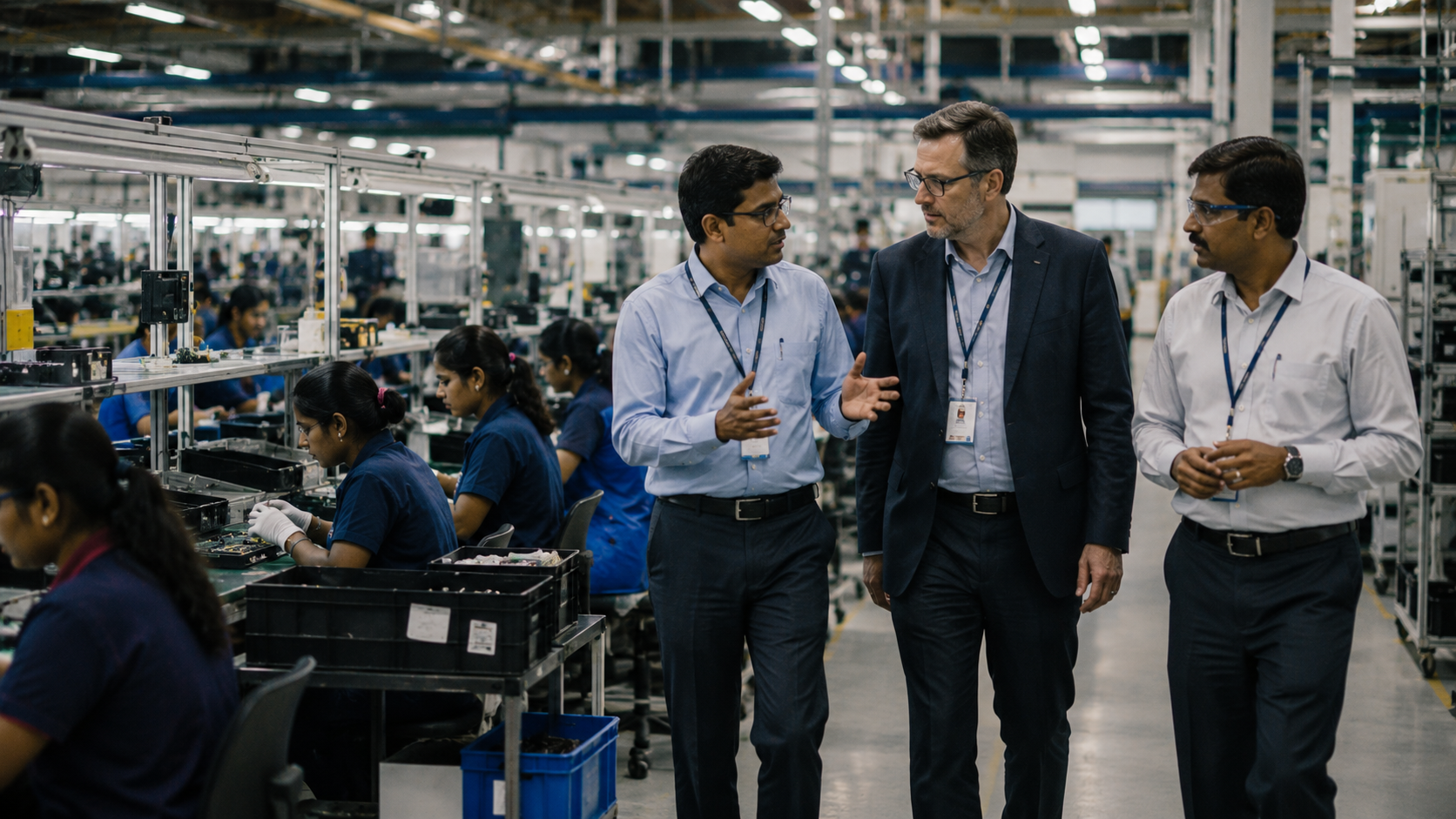
India Draws ₹4,895 Crore FDI
Foreign capital flowing into Indian technology, manufacturing and infrastructure sectors after easing rules for limited non-controlling investments.

SBI Eyes ₹200 Trillion Business
Modern Indian banking operations and rising financial growth charts representing SBI’s potential to reach ₹200 trillion in total business by 2030.