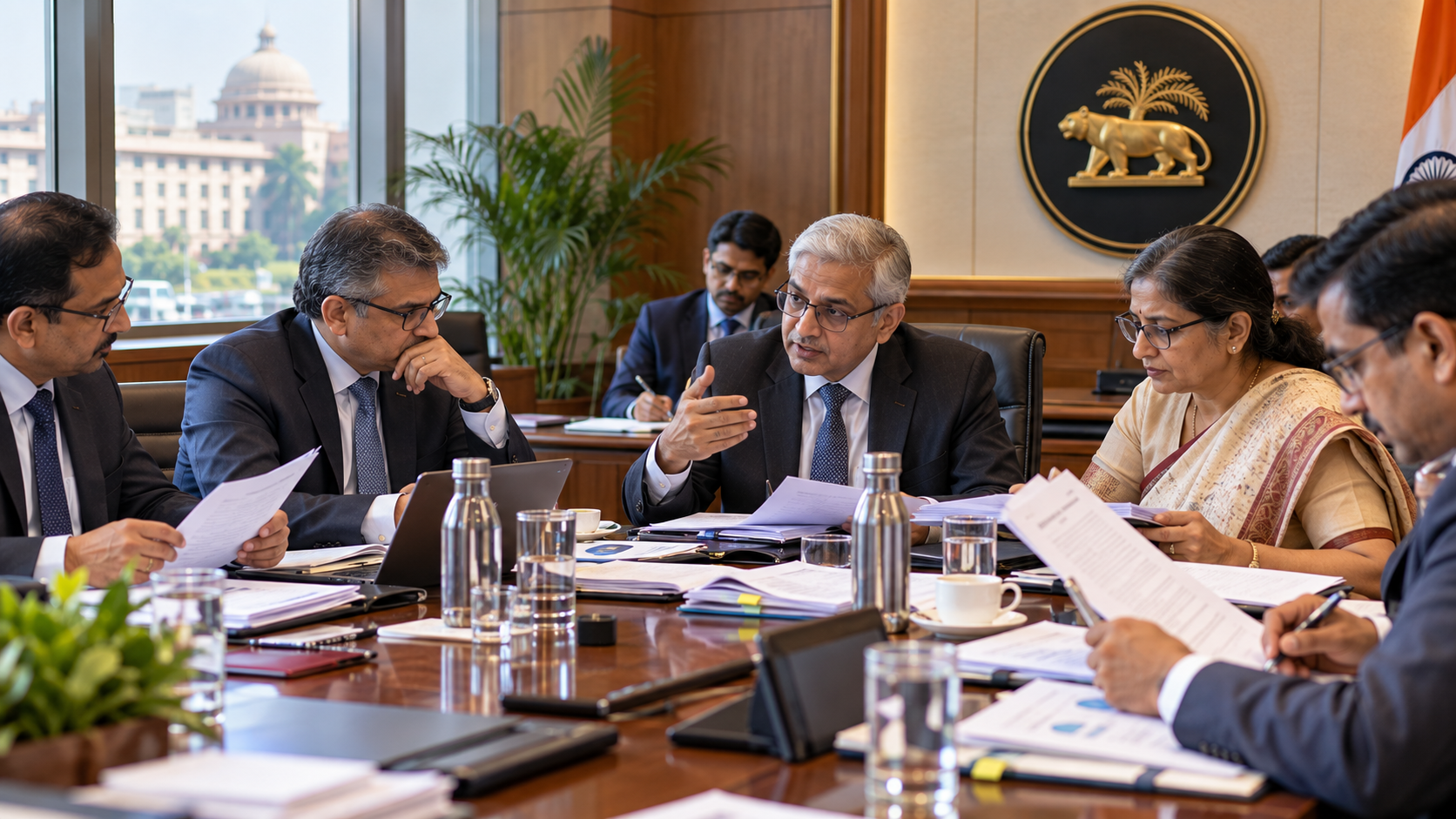

ICICI Bank mobilised USD 17.88 billion through FCNR(B) deposits under the RBI’s special foreign currency swap facility.
IFFCO-TOKIO Names Fujimoto CEO
Tatsuya Fujimoto has been appointed Managing Director and CEO of IFFCO-TOKIO General Insurance after serving in senior operational and risk-management roles.
Mahanadi Coalfields Files IPO Papers
Coal India Plans Ten Percent Stake Key Highlights Updated News Article Mahanadi Coalfields Ltd has filed preliminary papers with market regulator Sebi for an initial public offering through which its parent company Coal India Ltd plans to sell a 10% stake. According to the draft red herring prospectus dated August 31, the proposed IPO will consist entirely of an offer for sale of up to 66,18,36,300 equity shares by Coal India. Since the issue contains no fresh share component, Mahanadi Coalfields itself will not receive any funds from the IPO. The entire proceeds from the share sale will accrue to Coal India as the selling shareholder. The proposed listing is part of Coal India’s broader strategy of unlocking value from its subsidiaries through the capital markets. Coal India has already taken two of its subsidiaries to the stock market this year. Bharat Coking Coal Ltd was listed in January, while Central Mine Planning & Design Institute Ltd was listed in March. Coal India Chairman and Managing Director B Sairam recently indicated that the IPOs of South Eastern Coalfields Ltd and Mahanadi Coalfields would be completed during the current financial year, although the exact timing would depend on market conditions and government directions. Coal India’s board had earlier approved in-principle plans to divest up to 25% of the equity in both MCL and SECL through the offer-for-sale route. Mahanadi Coalfields is one of the most important subsidiaries of Coal India. Incorporated in 1992, the Odisha-based company produced 218.31 million tonnes of coal during fiscal 2026. According to information cited in the draft papers, this represented around 22.4% of India’s total non-coking coal production. MCL also accounted for approximately 28% of Coal India’s overall coal production during the year. Coal India remains the dominant producer in India’s domestic coal sector, accounting for more than 80% of the country’s domestic coal output. MCL’s proposed listing therefore represents a significant transaction for the country’s primary capital market and could provide investors with direct exposure to one of India’s largest coal-producing businesses. The company had 17 operational mines as of June 30, 2026, including 14 opencast mines and three underground mines. For the quarter ended June 2026, MCL reported revenue from operations of Rs 8,034 crore, compared with Rs 7,548.3 crore during the corresponding quarter of the previous year. Net profit, however, declined slightly to Rs 2,399 crore from Rs 2,448.3 crore in the year-ago period. MCL was granted Miniratna Category-I status in 2019 and remains a wholly owned subsidiary of Coal India. The proposed IPO comes at a time when investors are closely watching government-led divestments and listings of large public-sector subsidiaries. Such transactions can help parent companies unlock value while giving investors access to individual businesses within large corporate groups. The issue is being managed by SBI Capital Markets, Axis Capital, BOB Capital Markets, IDBI Capital Markets & Securities and IIFL Capital Services. KFin Technologies has been appointed as the registrar.
Subhash Chandra Challenges NCLT Bench
Subhash Chandra’s personal insolvency dispute reaches the NCLAT as his legal team challenges the constitution of a five-member NCLT bench.
APSEZ Cargo Hits Record High
August Throughput Crosses 50 Million Key Highlights Updated News Article Adani Ports and Special Economic Zone Ltd recorded its highest-ever monthly cargo throughput in August, handling 50 million tonnes as strong domestic activity, rising container trade and a diversified cargo mix supported volumes. The company said August cargo volumes increased 19% from 41.9 million tonnes recorded in the same month a year earlier. The growth was broad-based across cargo categories. Dry cargo volumes increased 25% year-on-year, while container volumes rose 15%. Shipments of commodities including coal, iron ore, limestone and other minerals also contributed to the increase. International operations provided additional support. North Queensland Export Terminal in Queensland, Australia, contributed to the overall volumes, while Colombo West International Terminal in Sri Lanka continued its ramp-up. Several major assets within APSEZ’s network also recorded growth. These included Mundra in Gujarat, Krishnapatnam in Andhra Pradesh and the company’s port operation at Dar es Salaam in Tanzania. The August record represents a strong start to FY27. APSEZ handled 43.1 million tonnes in April, followed by 48.3 million tonnes in May, 46.8 million tonnes in June and 46.3 million tonnes in July. With August’s performance included, cumulative cargo handled during the first five months of FY27 reached 234.4 million tonnes, representing a 16% increase over the corresponding period a year earlier. Dry cargo volumes during the period increased 17%, while container volumes rose 15%. The performance comes against the backdrop of resilient economic activity in India. The country’s real GDP expanded 7.8% in the April-June quarter of FY27, with manufacturing growth reaching 9.2% and services expanding 10%. At the same time, global shipping markets continue to face significant uncertainty. Geopolitical tensions, changing shipping routes and supply-chain restructuring are influencing the movement of goods between major trade corridors. These developments are increasing the importance of port operators that can provide access to multiple markets and cargo categories. APSEZ’s network of Indian and international gateways gives the company exposure to a broad range of commodities and trade routes. The company operates across ports, marine services and logistics, allowing cargo to move through multiple gateways as trade patterns evolve. Its logistics business also provides inland connectivity between ports and consumption and production centres. Rail volumes reached 54,131 twenty-foot equivalent units in August, up 6% from July. The company has been expanding its integrated logistics capabilities as part of a broader strategy to connect ports with industrial and consumption centres. The latest monthly record strengthens APSEZ’s position as India’s largest port operator and supports its longer-term growth ambitions. The company is targeting annual cargo handling capacity of one billion tonnes by FY31. Achieving that target will require continued investment in port capacity, logistics infrastructure and international operations. The August performance demonstrates the potential benefits of a diversified port network at a time when global trade routes are undergoing significant changes.
JioHotstar Expands Global Footprint
UK Canada Singapore Services Launch Key Highlights JioHotstar has expanded its international presence with the launch of its streaming service in the United Kingdom, Canada and Singapore, marking a significant step in the platform’s ambition to develop into a global entertainment destination. The platform, operated by JioStar, said its international offering will provide access to more than 1,60,000 hours of content across more than 12 languages. The expansion is aimed primarily at the South Asian diaspora while also seeking to attract a broader international audience interested in Indian entertainment and stories from across the region. JioHotstar said the service will combine its extensive content catalogue with personalised recommendations, interactive features and flexible subscription options. The platform also plans to introduce more than 30,000 hours of fresh content annually across the three markets. The offering will include original productions, established entertainment franchises and television programming. The company believes that demand for Indian entertainment extends beyond the South Asian diaspora as international audiences increasingly seek stories and cultural content from markets outside their own. Amit Malhotra, Head of International Business at JioStar, said the streaming industry had traditionally competed largely on the size of content libraries, while the next opportunity lies in changing how audiences discover and engage with entertainment. The international expansion gives JioHotstar an opportunity to build a presence in markets where Indian-language entertainment already has an established audience base. The United Kingdom, Canada and Singapore are home to significant South Asian communities, creating a natural customer base for Indian television, films and original programming. At the same time, the platform’s strategy extends beyond simply exporting an Indian streaming product. JioStar said it wants to develop a broader entertainment proposition for international audiences. The launch comes after the creation of JioStar through the merger of Reliance’s media business with the India business of global entertainment company Walt Disney. The combination brought together significant television, digital and entertainment assets. JioHotstar already has a large domestic user base, with the company stating that it has more than 500 million active users. Its international rollout represents an effort to leverage that scale and content ecosystem in overseas markets. Personalisation is expected to be a major component of the service. As streaming competition increases globally, platforms are increasingly relying on recommendation systems and interactive experiences to help viewers discover content. JioHotstar’s international launch also comes at a time when streaming services are increasingly looking beyond domestic audiences for growth. Content produced in one country can now reach viewers across multiple regions, particularly when supported by subtitles, dubbing and multilingual catalogues. The company’s planned addition of more than 30,000 hours of fresh content every year is expected to help maintain engagement and strengthen the platform’s competitive position. The success of the international expansion will depend on subscriber acquisition, pricing, content localisation and the platform’s ability to compete with established global streaming services. For JioStar, however, the launch represents an important step toward building a global entertainment business around Indian content and the growing international demand for South Asian stories.
Novonesis Plans Rs 6,600 Crore
Patalganga Plant Gets Major Expansion Key Highlights Updated News Article Danish biosolutions company Novonesis has announced a Rs 6,600 crore investment to expand its enzyme manufacturing facility at Patalganga in Maharashtra, strengthening its production capabilities to serve growing demand across emerging markets. The expansion is expected to take place over the next four years, with the upgraded facility projected to become fully operational by 2030. The expanded plant will manufacture enzymes used across several industries, including biofuels, household care, food and beverages. Novonesis said the project will help the company meet increasing demand from emerging markets, particularly India, South Asia, the Middle East and Africa. Novonesis President and Chief Executive Ester Baiget said these markets represent an increasingly important and growing part of the company’s business and are expected to expand faster than developed markets in the coming years. The company’s Chief Operating Officer Anders Lund said the Patalganga facility would bring production closer to customers while improving scale, operational resilience, efficiency and supply flexibility. The investment also reflects the growing importance of biotechnology-based industrial solutions. Enzymes have applications across a wide range of industries, including food processing, detergents, biofuel production and industrial manufacturing. Novonesis plans to incorporate resource-efficient technologies into the expanded facility. Freshwater recycling will reduce the amount of water drawn by the plant, while integrated heat pumps will help lower energy consumption. The company’s regional President for the Middle East, India and Africa, Krishna Mohan Puvvada, highlighted India’s BioE3 policy, describing it as an important step toward unlocking the economic, social and environmental potential of biosolutions. The Patalganga facility has an established manufacturing history. It was originally commissioned in 2019 by Novozymes. Novozymes later merged with Chr. Hansen, resulting in the creation of Novonesis in 2024. Patalganga is located near Mumbai and has developed into a major industrial cluster. The area houses several chemical, pharmaceutical and petrochemical operations, making it an important manufacturing location in Maharashtra. The new investment could strengthen the state’s industrial ecosystem while creating additional opportunities for engineering, logistics, technology and industrial-service providers. Novonesis has previously invested in manufacturing expansions in markets including Thailand, the United States and Brazil as part of its broader capital expenditure programme. The company’s latest commitment to Maharashtra comes as global manufacturers increasingly look to establish resilient supply chains closer to high-growth markets. India’s expanding industrial base and large consumer market make the country an increasingly attractive location for manufacturing and technology investments. For Novonesis, the Patalganga expansion is expected to provide additional production capacity while improving access to customers across India and neighbouring markets. The emphasis on lower water and energy consumption also reflects the increasing importance of sustainability in industrial investment. As manufacturers face growing pressure to improve resource efficiency, technologies such as water recycling and heat recovery are becoming increasingly relevant. The expanded plant is expected to become a significant part of Novonesis’ regional manufacturing network once it reaches full operational capacity. Novonesis investment India, Rs 6600 crore investment, Patalganga enzyme plant, Novonesis Maharashtra, biotechnology India, enzyme manufacturing India, BioE3 policy, industrial investment Maharashtra, sustainable manufacturing India, Novonesis plant expansion
Pranav Constructions Sets IPO
Mumbai Developer Targets Expansion Key Highlights Mumbai-focused real estate developer Pranav Constructions has fixed a price band of Rs 118 to Rs 124 per share for its initial public offering, with the issue expected to raise more than Rs 351 crore. The company announced that the IPO will open for public subscription on September 7 and close on September 9. The issue consists of a fresh equity share issuance of approximately Rs 315.6 crore and an offer for sale of 28.57 lakh equity shares by investor shareholder BioUrja India Infra. The total issue size is expected to be around Rs 351 crore. According to the company’s red herring prospectus, funds raised through the fresh issue will be used for several purposes linked to its redevelopment business. These include obtaining government and statutory approvals, purchasing additional Floor Space Index and compensating members for alternate accommodation. The company also plans to use a portion of the proceeds to meet hardship compensation requirements for selected under-construction and upcoming redevelopment projects. Other proposed uses include debt repayment, acquisition of future redevelopment projects and general corporate expenses. Pranav Constructions operates primarily in the Municipal Corporation of Greater Mumbai redevelopment segment, particularly across Mumbai’s Western suburbs. The company focuses on redevelopment projects covering economical, mid and mass-market and aspirational housing segments. Mumbai’s redevelopment market has become an increasingly important component of the city’s real estate supply. Ageing residential buildings, limited availability of land and strong housing demand have encouraged housing societies and developers to pursue redevelopment projects. However, redevelopment projects also involve complex approval procedures, construction requirements, financing needs and negotiations with existing occupants. Efficient execution and timely receipt of regulatory approvals will therefore remain important factors for Pranav Constructions as it expands its project pipeline. The company’s proposed use of IPO proceeds indicates an emphasis on strengthening its development pipeline while managing financial requirements. Debt repayment could also help improve the company’s financial position and provide greater flexibility for future projects. The IPO comes amid continued activity in India’s primary capital market, where real estate companies are increasingly turning to public markets to raise capital and provide liquidity to existing investors. Centrum Capital and PNB Investment Services have been appointed as book-running lead managers for the issue. The company’s shares are proposed to be listed on both the BSE and NSE. For prospective investors, the company’s concentration in Mumbai redevelopment provides exposure to one of India’s most valuable and supply-constrained property markets. At the same time, the performance of the business will depend heavily on project execution, cost management, regulatory approvals and the ability to secure new redevelopment opportunities. The IPO will therefore provide investors with an opportunity to assess the company’s development pipeline and financial strategy as it prepares to enter the listed market.
India’s E-Commerce Market To Reach $345 Billion
Quick commerce drives next growth Key Highlights New Delhi, September 2 — India’s e-commerce sector is projected to nearly triple to USD 345 billion by 2030 from USD 125 billion in 2024, driven by the rapid expansion of quick commerce and increasing integration of artificial intelligence (AI), according to a report released on Wednesday. Research consultancy Infisum, in its report titled ‘Smart Growth in a Fast Market’, expects the market to grow at a compound annual growth rate (CAGR) of 18.4 per cent through 2030. Quick commerce has emerged as the fastest-growing segment of India’s e-commerce ecosystem. The segment is estimated to reach USD 65–70 billion by 2030 and is expected to contribute 45–50 per cent of incremental e-retail growth over the next five years. The expansion of rapid-delivery services is also expected to drive a sharp increase in dark-store infrastructure. The country’s dark-store network is projected to nearly triple from 2,525 locations in 2025 to approximately 7,500 by 2030. Blinkit currently leads the competitive quick-commerce market with a 44 per cent share and processed 900 million orders in FY26. Zepto follows with a 25 per cent market share, while Swiggy Instamart holds 20 per cent. Consumer demographics are also expected to play a major role in the sector’s expansion. Gen Z already accounts for nearly one-third of online shoppers and is expected to become India’s largest digital spending cohort by 2030. The growth of online commerce is increasingly extending beyond metropolitan centres. Around 66 per cent of new direct-to-consumer (D2C) orders now originate from Tier II and Tier III cities, highlighting the increasing importance of smaller markets. By the end of the decade, e-commerce is expected to account for 10–12 per cent of India’s total retail spending and contribute 2.5 per cent to national GDP. The sector is projected to serve around 420–440 million online shoppers. Technology is expected to remain a major driver of this transformation. AI and machine learning are projected to improve retail productivity by 35–37 per cent by 2030. Technologies including conversational commerce, AI-powered shopping assistants and virtual try-ons are changing consumer discovery and purchasing behaviour. The report indicates that quick-commerce expansion, growing digital adoption in smaller cities and AI-led retail innovation will remain central to India’s e-commerce growth over the coming years.
FCNR(B) Inflows Cross $100 Billion
RBI swap window draws strong inflows Key Highlights New Delhi, September 2, 2026 — Capital inflows through Foreign Currency Non-Resident (Bank), or FCNR(B), deposits crossed the $100-billion mark by August 31, substantially exceeding the Reserve Bank of India’s earlier expectations for the special foreign-exchange swap programme. According to a Financial Times report cited by Business Standard, the FCNR(B) scheme accounted for the bulk of the inflows under the RBI’s special swap facility. The facility also attracted funds through external commercial borrowings (ECBs) and overseas foreign currency borrowings (OFCBs). (Business Standard) The RBI had earlier estimated that the three routes together could attract around $80 billion. Governor Sanjay Malhotra had said in August that the central bank expected inflows of at least $80 billion through the subsidised swap facilities, describing the strong response as a reflection of India’s macroeconomic fundamentals and a potential boost to the country’s balance of payments. (Reuters) The central bank operationalised the special swap facility on June 8, while FCNR(B) inflows began on June 23. RBI data available up to August 21 showed that the three routes had already attracted $72.85 billion, including $65.4 billion through FCNR(B) deposits, $4.86 billion through OFCBs and $2.59 billion through ECBs. (Business Standard) The strong response prompted the RBI to bring forward the closure of the FCNR(B) window. The facility, originally scheduled to remain available until September 30, closed on August 31. However, banks can continue to use the RBI’s swap facility for FCNR(B) deposits that had already been contracted until September 11. The swap arrangements carry maturities of three to five years, with most of the funds raised under the facility coming through deposits with a five-year maturity. The ECB and OFCB windows, meanwhile, will remain open until December 31, 2026. (Business Standard) The surge in foreign-currency deposits has strengthened the RBI’s foreign-exchange position at a time when the central bank has been actively managing pressure on the rupee. Reuters reported that NRI deposits under the concessional swap arrangements rose from $65.4 billion on August 21 to more than $100 billion by August 31, adding to the central bank’s capacity to support the currency and intervene in foreign-exchange markets. (Reuters) The RBI’s decision to close the FCNR(B) window early was earlier described by Malhotra as a calibrated and data-driven response to the strong inflow response. The central bank had indicated that advancing the deadline was a decision taken from a position of strength. (Reuters) The scale of the inflows provides India with an additional foreign-exchange buffer and comes as the RBI continues to navigate external pressures including elevated oil prices, global bond yields and volatility in currency markets. The strong mobilisation also highlights the response from overseas depositors to the temporary incentives built into the special swap facility. With the FCNR(B) window now closed but contracted transactions eligible for swaps until September 11, attention will shift to the remaining ECB and OFCB facilities and the extent to which the additional foreign-currency inflows strengthen India’s external-sector resilience.