
• The services economy has been the most critical success story for India Inc in the post-liberalisation era, which helped relieve pressure on Balance of Payments.
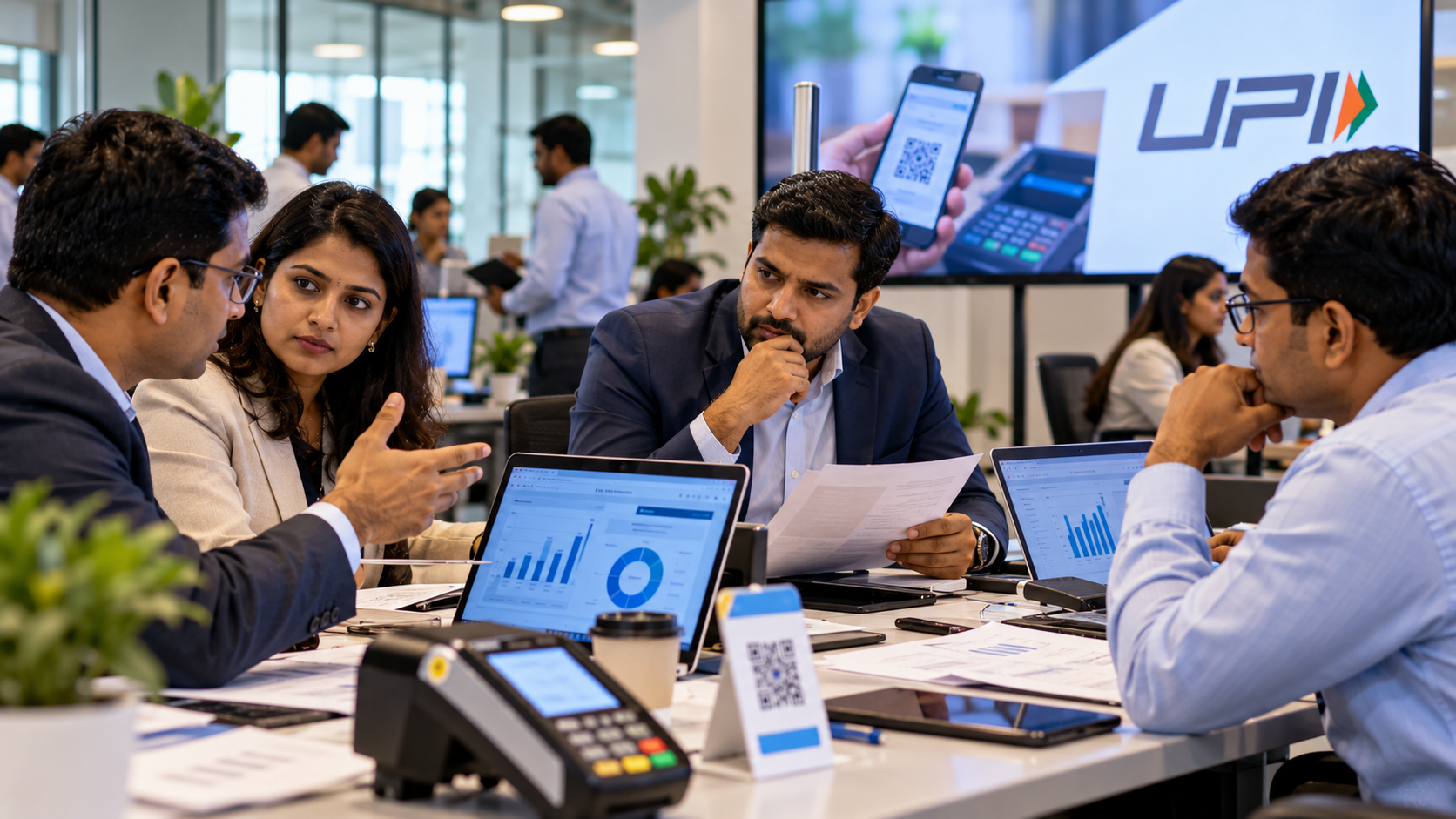
• Startups in particular are formalising India’s huge informal economy and reducing market related transaction costs in various sectors such as in payments, cab ordering, housing search, clothes, groceries, meals and insurance policies.
• Going ahead, startups should be more involved in real economy issues, for which they can take a cue from success stories like Arvind Eyecare and Amul.
• Since manufacturing may not absorb too many people, agriculture and services should be prime areas of focus for startups in India to drive employment.

The post-1991 period has been pivotal in the journey of India’s economy. Thanks to liberalisation, globalization and economic growth, there was movement and dynamism, and companies were willing to take greater risk as we entered the 21st century. The presence of world class higher education institutions like the IITs and premier management schools meant that India was well primed to take advantage of its liberalisation policies.
This was to provide the fuel for the rapid growth in the services sector, particularly in information technology. The growth in IT and IT-enabled services and the BPO industry was not only an employment generator, but also relieved the pressure on the balance of payments (BoP) front. From a BoP crisis in 1991, we now have over US$ 400 billion of forex reserves. But the next major challenge is how are the IT and BPO companies going to react to the challenge posed by AI? Many of them are now in the process of training and retraining their employees, and I feel that they will have to substantially increase their collaboration with other IT-enabled startups.
Indeed, startups are increasingly playing a catalytic role in India’s economy. Many of them are formalising India’s huge informal economy and reducing market related transaction costs – in various sectors such as in payments, cab ordering, housing search, clothes, groceries, meals, insurance policies, etc. But going forward, I would be more interested in what the startup is doing to directly impact the production of food, clothing, housing etc. rather than only in the marketing of these products. For instance, when it comes to agriculture, some startups are aggregating supply and bringing it fresh to your home. But we also have to improve the productivity of the farmer. Startups need to do much more to impact the product level and productivity.
Personally, my most admired Indian company is Amul. Its founder Verghese Kurien conceptualized sourcing milk from the farmers, making milk powder from it at facilities employing world class technologies, and creating a supply chain that was unprecedented in India. Kurien accomplished this feat with a perishable product for which the company also ensured value addition with other products – ice cream, paneer, cheese, butter milk, etc. – in a highly efficient manner. Imagine the fact that you are selling milk for Rs 42, and Rs 38 is going to the farmer. Within Rs 4, they are managing everything else. Their excellent umbrella branding strategy with the Amul girl covers all their offerings and continues to enjoy great success till date. The Amul story demonstrates what can be achieved when leadership committed to furthering the interests of all stakeholders, including a company’s owners, suppliers and consumers, employs the best technology and managerial systems to create value.
The other Indian company that I greatly admire is Arvind Eyecare, which treats cataracts. The founders of Arvind realised that the cost of cataract surgery needs to be drastically reduced for this procedure to become affordable for millions of Indians. For this purpose, they studied the business models of McDonald’s and Ford. The founders decided not to employ nurses and doctors for every stage of treatment and brought in women from the villages. These women were trained in various procedures and the doctor only does the last-mile stitch. The lens was expensive. So they developed intraocular lenses in their own lab that brought down the cost from US$ 150 to US$ 1.5, while meeting desired quality standards. Arvind Eyecare charges from the rich and subsidises the poor. There are some difference in the frills for the rich and poor patients – like air conditioning, shared kitchens, etc – but the medical service is exactly the same. This also gives another valuable insight – that in India, you have to play the low margin, high volume game in order to be successful in the delivery of societal goals, rather than the other way round.
But I will not give Indian manufacturing very high marks, with the exception of a few sectors, particularly because it is not big on R&D. It is also unfortunate that we haven’t paid enough attention to agriculture, especially in the area of drip irrigation, where Israel has done so well. Moreover, we are still relying on water guzzling crops, which also creates environmental damage. It does not make ecological sense to grow rice in Punjab and Haryana and sugarcane in Maharashtra. Provision of free underground water and near-free electricity distorts the incentive structure. Moreover, our procurement policy has been overly focused on cereals and we should be paying more attention to horticulture.
Of course then you need cold chains. Once you have a cold chain going, these products become amenable to exports as well. Right now, we are exporting unprocessed food products like basmati rice. We have encouraged organic farming in some states, which is a positive; and we could do more. The West is receptive to organic products, so that needs to be the next big push when it comes to agricultural exports.
Getting priorities right
When it comes to growing the Indian economy and reversing the current slowdown, it is a chicken and egg situation with respect to investment, consumption and demand. Will you increase the income first and that will increase consumption demand; or consumption demand will increase first and then income will increase? Income can be consumption driven if consumers are big consumers of credit, like in US where people have low household savings rates. This is not true for the Chinese, who save almost 50% of their income. The low personal savings rate in USA have been fueling China’s economic boom till recent times. So this has served as a macro stimulus for China. And since the US dollar is accepted worldwide, it hasn’t sunk despite huge American trade deficits.
Keynes had a fundamental insight on the Great Recession in the US in 1930s, when monetary policies failed. He realized that until the government stepped in to increase aggregate demand such as by increasing government expenditure, the economy may remain stuck in a low demand low supply equilibrium trap. Once expectations of people change, the story can be different. Then you think the economy will grow and start investing. When I start investing, the investment itself creates demand. You will set up a factory, employ people, etc. So demand can come from exports, government expenditure or private investment. These are three exogenous sources of demand. Consumption is largely endogenous being dependent on current income. The only way it can be made exogenous is when you link it to credit and make consumers optimistic about the future, or by effecting money transfers from government to consumers.
Protectionism in the global environment may impact us in future in a major way because I don’t think we will be able to replicate the export-led model of growth that China and many other East Asian countries have used thus far. Also, I don’t see this issue going away, even if there is a change in leadership in the US. The income inequalities that have arisen in the West due to globalization have greatly reduced the appetite for the continuation of major trade deficits in countries such as USA and UK. India may have to work harder on the markets in the East, Africa, etc.
Since we may not be able to rely on exports as the major macro stimulus to propel growth in the future, the importance of international trade has to be viewed from three other key angles. Firstly, exports will still be needed to pay for imports, especially because of our high dependence on oil imports. The second reason is linked to productivity improvements. International exposure helps to incentivize firms to upgrade technologies and managerial technique. Finally, many of our new service start-ups such as Oyo need to expand into foreign markets in order to achieve scale economies that enable them to compete with multinationals.
Agriculture is not something we can escape from, simply because employment intensity of other sectors is not that high. Moreover, with AI and robotics coming in, we will not be able to absorb too many people in manufacturing.
Startups that help raise productivity and raise production levels in various sectors of the economy are the need of the hour. IT-enabled digital startups are going to drive the next wave of growth in my view. My concern here is whether we can broad-base our startup business models and take them to the real economy, rather than just market making. Some agri-startups are trying to cut out the middlemen and I think they need to be encouraged. But I think that we need a lot of deep tech startups, where agriculture is concerned, which can help in adoption of drip irrigation, improved agricultural inputs and techniques. Startups can also play a key role in the pivotal areas of education and health. While Byju’s is expanding at a high rate, will it be able to bring education and skills to India’s masses in an effective and relevant fashion?
Finally, development is about much more than economic growth. We need to ensure that in our pre-occupation with economic outcomes, we do not neglect environmental sustainability and cultural progress. The Indian dream need not be a replica of the American dream.

Dr. Vivek Suneja is Professor of Strategy at the Faculty of Management Studies (FMS), University of Delhi. As a Felix Scholar, he studied for his doctoral degree from the University of Reading in the United Kingdom. For over a decade, he taught at various premier Universities in Britain including at the University of Salford, Manchester and at the Open University Business School, Milton Keynes. Upon his return to India, he joined FMS as Professor. He has served as Dean of Planning in the University of Delhi and as Pro-Vice-Chancellor of the University of Delhi. Prof Suneja has published several books and papers in the areas of Strategy, Marketing, Entrepreneurship, Economics, Culture and Public Policy. Among his prominent books are “Markets: A Multi Dimensional Approach to the Market Economy” published by Routledge, U.K.; “Policy Issues for Business” published by Sage, U.K.; and the “Economics of Marketing” published by Edward Elgar, U.K. His most recent book “Economic Theory and Policy amidst Global Discontent” has just been published by Francis & Taylor, U.K. Prof. Suneja has done consulting and training work for several prominent international and national organisations and firms. He is deeply committed to furthering societal well being.