A new report recommends a government-industry partnership to strengthen domestic coking coal production, reduce import dependence and support India’s steel industry.
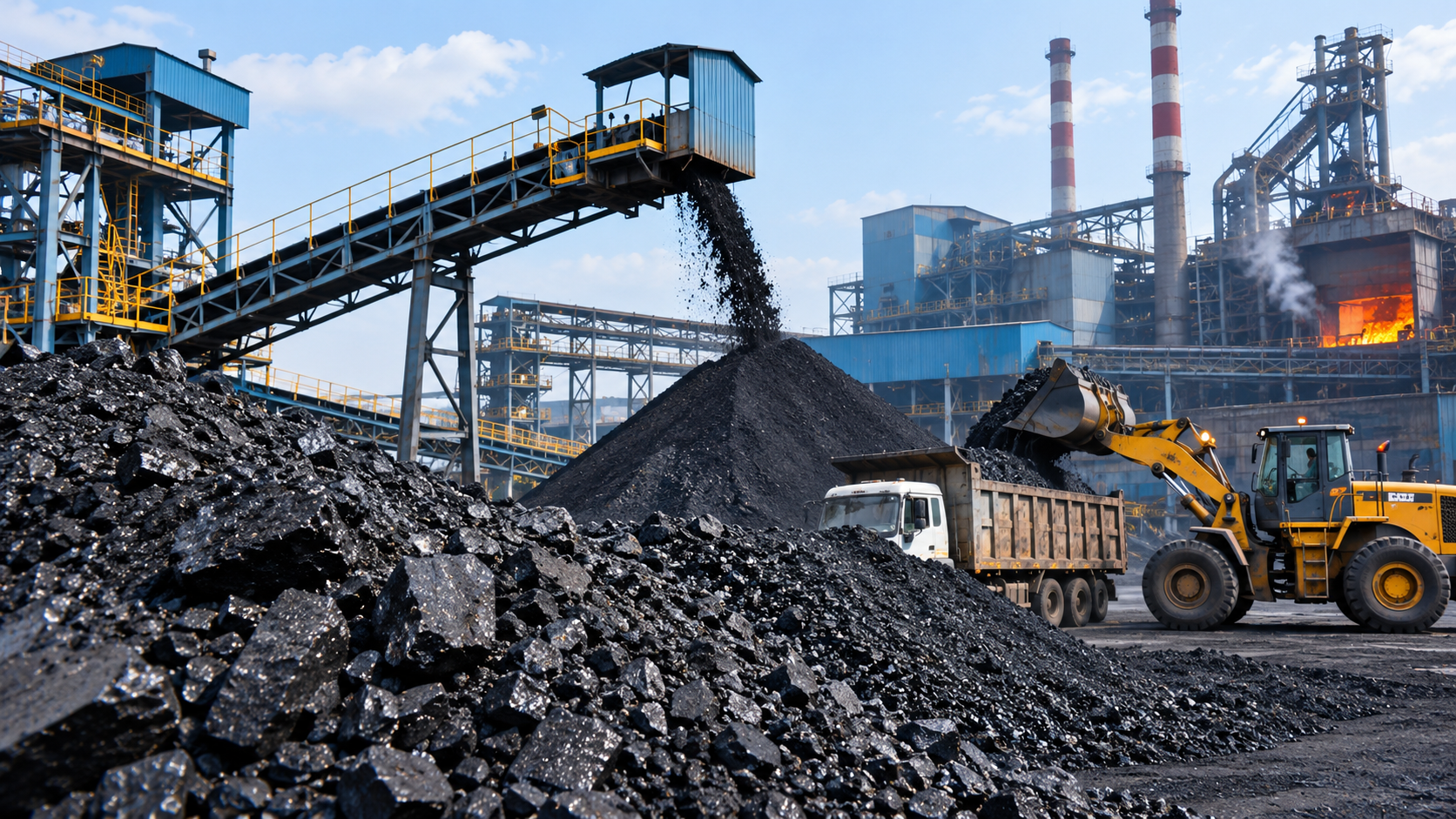
India should transform its existing Mission Coking Coal into a joint government-industry initiative to strengthen domestic supplies and reduce dependence on imported coking coal, according to a recent industry report. The proposal recommends leadership from the Ministry of Coal and the Ministry of Steel, supported by a unified quarterly performance monitoring system.
The report, titled Coking Coal: Fueling India’s Steel Ambition in a Carbon-Priced World, was launched during the ISA Conclave 2026. It highlights that India’s coking coal challenge extends beyond mining and involves coal processing, steel production, transportation, international sourcing and carbon compliance.
Instead of establishing a new institution, the report suggests expanding the existing Mission Coking Coal by bringing government departments and industry stakeholders together. It identifies five priority areas: increasing usable domestic coal supplies, diversifying overseas sourcing, improving logistics, strengthening emissions data and developing market intelligence.
The report also recommends modernising coal washeries, expanding stamp charging technology and introducing a phased coal-acceptance system. Gasification could also be explored as an alternative for high-ash coal that cannot be upgraded through conventional washing processes.
India’s coking coal demand is projected to increase from 87 million tonnes in FY25 to 135 million tonnes by 2030, driven by the expansion of the steel industry. Meanwhile, domestic production is targeted to rise from 66.8 million tonnes of raw coal in FY24 to 140 million tonnes by FY30.
Australia remains India’s dominant supplier, while the country is exploring alternative sourcing opportunities in Mongolia and Mozambique. The proposed initiative aims to improve supply security, control costs and strengthen the long-term competitiveness of India’s steel sector.