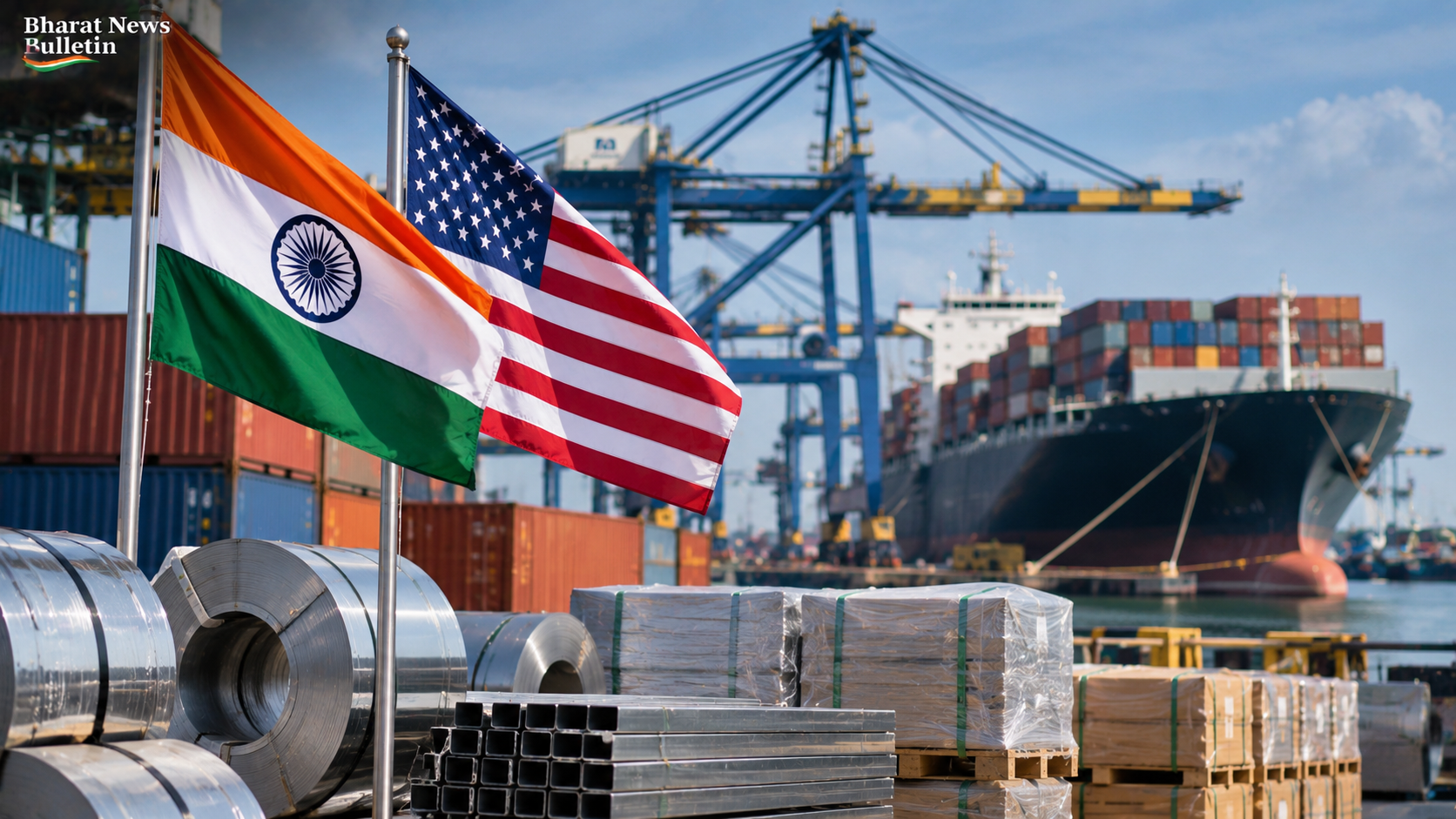
The United States has proposed imposing 17 per cent tariffs on Indian goods under a new trade investigation, citing concerns over excess industrial capacity and its potential impact on American manufacturers. The proposed rate could rise to 25 per cent if India does not reach a trade agreement with Washington.
Highlights:
- US proposes 17% tariffs on goods imported from India.
- The proposed tariff could increase to 25% without a trade agreement.
- The proposal is part of the US Trade Representative’s Section 301 investigations.
- The investigation covers 16 economies accused of maintaining excess industrial capacity.
- Washington argues that surplus production could undermine American industries.
- The proposed tariffs would be separate from existing forced-labour and certain sector-specific tariffs.
- The investigation follows the US Supreme Court’s decision overturning earlier broad trade levies imposed under IEEPA.
The United States Trade Representative (USTR) on Wednesday, November 25, proposed imposing tariffs on Indian goods, arguing that India’s industrial policies have contributed to excess production capacity that could negatively affect American companies.
Under the proposal, the tariff rate could reach 25 per cent in the absence of a trade agreement, while a qualifying agreement could bring the rate down to 17 per cent.
The proposed duties form part of the US administration’s broader Section 301 investigations into alleged structural excess industrial capacity across 16 economies.
Section 301 Investigation Targets Industrial Overcapacity
The investigation was initiated under Section 301 of the US Trade Act of 1974, which allows Washington to respond to foreign government practices considered unreasonable or harmful to American commerce.
The USTR has been examining whether certain industrial policies encourage surplus production, potentially resulting in lower international prices and affecting American manufacturers.
India is among the 16 economies covered by the investigation, alongside other major manufacturing and trading economies.
US Identifies Concerns Across Indian Industries
The US investigation has highlighted concerns involving manufacturing capacity and industrial policies that Washington believes could affect American commercial interests.
Several sectors potentially affected by the investigation include:
- Pharmaceuticals and medical devices
- Steel manufacturing
- Solar equipment and products
- Information and communications technology
The investigation also examines market access restrictions, industrial support policies and other trade-related practices.
Supreme Court Ruling Led to Fresh Trade Investigations
The latest tariff proposal follows a major legal development in the United States.
The US Supreme Court overturned the Trump administration’s earlier broad tariffs imposed under the International Emergency Economic Powers Act (IEEPA).
Following the decision, the Office of the USTR initiated fresh investigations under Section 301, including one targeting structural excess manufacturing capacity across 16 economies.
A separate investigation was also launched concerning goods allegedly produced through forced labour.
Proposed Tariffs Could Affect Indian Exporters
The proposed tariff action could create additional uncertainty for Indian companies exporting goods to the American market.
Higher import duties could increase the cost of Indian products for American buyers, potentially affecting their competitiveness against suppliers from other countries.
Indian exporters across manufacturing and industrial sectors may need to assess the potential impact if the proposed measures are eventually implemented.
Trade Negotiations Remain Important
The proposed tariff rates also add pressure to ongoing India-US trade discussions.
The possibility of a lower tariff rate linked to a trade agreement highlights the importance of negotiations between the two countries.
The final impact will depend on the outcome of the investigation, subsequent decisions by the US administration and progress in bilateral trade negotiations.