
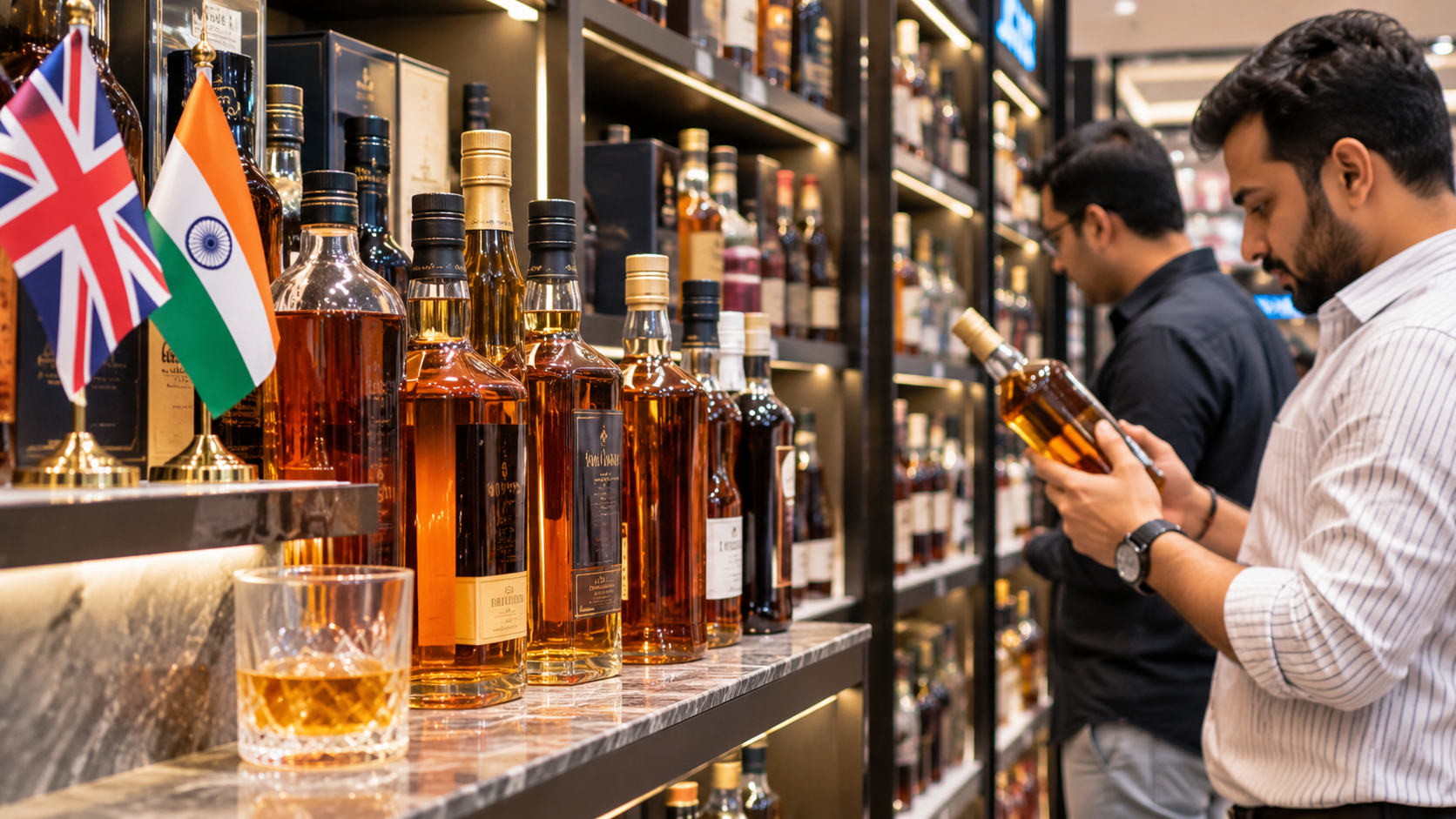
Prices of several premium Scotch whiskies are expected to decline in Delhi as the Excise Department begins implementing lower customs duties on British liquor. Premium whisky prices could fall by ₹200–300 per bottle, while some India-bottled Scotch brands may become cheaper by ₹100–150.
New Delhi, November 4 — Consumers in Delhi could soon pay less for premium Scotch whisky as the Delhi Excise Department has started implementing revised prices following a reduction in customs duty on British spirits.
The change follows the Comprehensive Economic and Trade Agreement signed between India and the United Kingdom last year, under which India agreed to substantially reduce import duties on British whisky and gin.
According to the information provided, the import duty on UK whisky and gin will be reduced from 150% to 75%, before gradually declining further to 40% in the tenth year of the agreement.
A senior Delhi excise official said the process has already started and revised costs have been granted to some wholesalers importing liquor.
Other segments are expected to be covered gradually.
How much could Scotch prices fall?
Consumers could start seeing the revised retail prices during November.
According to industry experts cited in the source, premium whisky brands such as Johnnie Walker could become cheaper by around ₹200–300 per bottle.
For Scotch brands bottled in India, including Black Dog, 100 Pipers, Passport, Vat 69 and Black & White, prices could decline by approximately ₹100–150 per bottle.
The final reduction may vary depending on the brand, import structure and other taxes and charges applicable to liquor.
Neighbouring Uttar Pradesh has already witnessed a decline in prices of several UK-origin liquor brands.
According to the information provided, prices of some British liquor products in the state have fallen by approximately 5–15%.
Delhi implementing revised rates
The Delhi Excise Department decided in October to implement the revised rates, paving the way for wholesalers to seek approval for lower costs based on the reduced customs duty.
The reduction is expected to be more visible in the premium imported liquor segment because customs duty forms a significant part of the final cost of imported spirits.
However, the customs duty cut does not necessarily mean retail prices will decline by the same percentage because the final price also includes other taxes, duties and margins.
Meanwhile, another major change in Delhi’s liquor market remains pending.
The Delhi government is working on a new excise policy, and according to officials cited in the source, a draft of the proposed policy has been sent to the Centre for approval.
For consumers, the immediate impact of the India-UK trade agreement is likely to be visible through gradually lower prices of selected premium British whisky and gin brands as revised costs move through Delhi’s liquor distribution system.