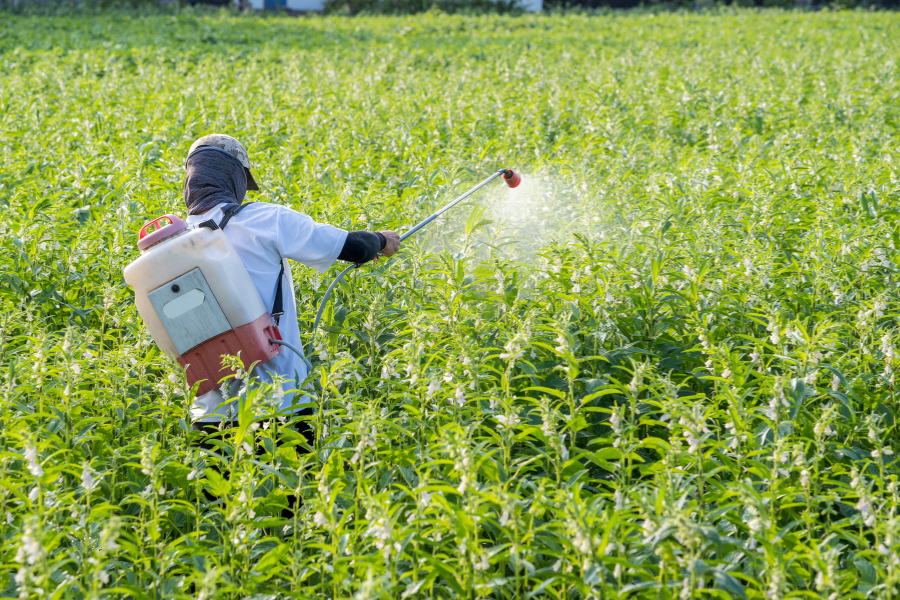
India has imposed restrictions on imports of Glufosinate and its salts under a DGFT notification dated April 13, 2026. Imports will be restricted for six months where the combined CIF value and applicable anti-dumping duty, calculated per kilogram, is below Rs 1,154. Glufosinate is an effective herbicide widely used for controlling weeds.
The Government has imposed restrictions on the import of Glufosinate and its salts, a herbicide used in agriculture, for a period of six months.
According to DGFT Notification No. 10/2026-27, dated April 13, 2026, imports of Glufosinate and its salts will be restricted where the combined CIF (cost, insurance, freight) value plus applicable anti-dumping duty calculated per kilogram is less than Rs 1,154.
The restriction covers HS Codes 38089193, 38089199, 38089361, 38089391, 38089399, 38089912, 38089991 and 38089999 under Chapter 38 of Schedule I (Import Policy) of ITC (HS) 2022. Certain product categories will also require a certificate of registration from the government, and the policy will be reviewed after one year.
India imported US$1.65 billion worth of fungicides, insecticides, herbicides and rodenticides in FY25, with about US$ 655 million sourced from China.
Glufosinate-ammonium is a highly effective herbicide used to control weeds across more than 100 crops globally. Farmers rely on it because it offers strong crop safety, affecting only the plant parts where it is applied. It controls a broad range of weeds, reducing the need for multiple herbicide applications in a single crop. Its unique mode of action makes it useful in rotation with other herbicides to manage weed resistance. First introduced in 1984, it is now registered worldwide for use in crops such as soybean, corn, canola and cotton that have been genetically engineered for tolerance to glufosinate-ammonium.
As a broad-spectrum herbicide, it targets both annual and perennial broadleaf weeds as well as grasses. It is also effective against glyphosate-resistant weeds such as amaranthus, lolium, conyza and malva. Its distinct biochemical pathway supports integrated weed management programs, helping improve crop health and overall agricultural yields while contributing to global food security.