As geopolitical tensions in West Asia disrupt global energy confidence, Indian households are beginning to rethink one of their most fundamental consumption choices—how they cook. Concerns over potential LPG and PNG supply disruptions have triggered a rapid shift toward electric cooking appliances, from induction cooktops to air fryers. What started as a precautionary response is now evolving into a deeper structural transition, driven by favourable economics, improved electricity access, and changing lifestyle preferences.
However, this shift is not without consequences. While electric cooking offers efficiency and energy security, its rapid adoption is also set to significantly alter India’s power demand profile, raising important questions around grid resilience and long-term energy planning.
Amid escalating tensions in West Asia, Indian households are swiftly responding to concerns over potential disruptions in piped natural gas (PNG) and liquefied petroleum gas (LPG) supplies. This uncertainty has triggered a noticeable shift toward electric cooking solutions, particularly induction cooktops. Retailers—both offline and online—are reporting a sharp spike in demand, with sales in major cities such as Delhi, Mumbai, and Bengaluru rising multiple times over usual levels. The spike in demand highlights a combination of caution and practical foresight, with consumers seeking to protect themselves from possible fuel shortages and sudden price rises. (Notably, India spends around US$ 26.4 billion annually on cooking gas imports, much of which passes through the Strait of Hormuz, underscoring its exposure to global supply risks.)
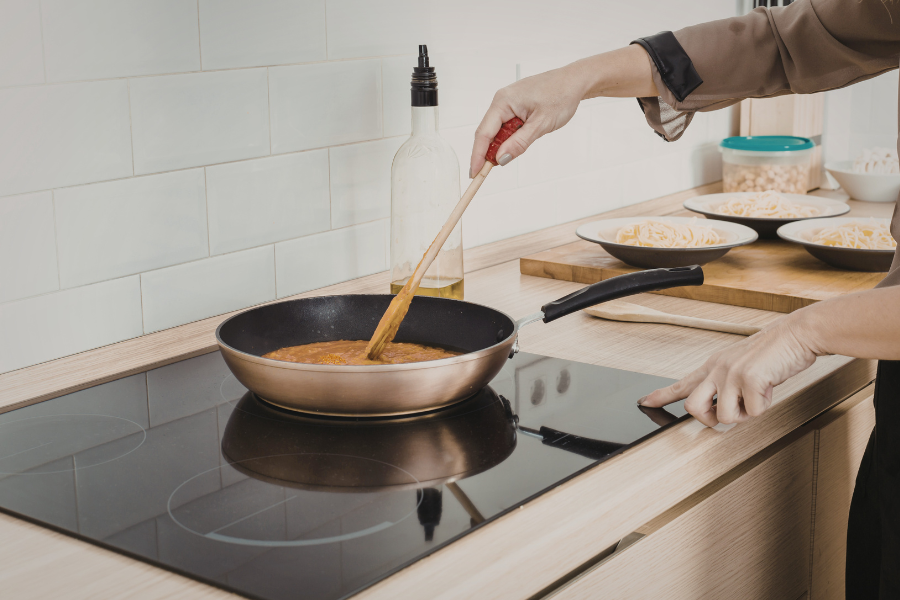
Electric cooking offers a range of advantages, including higher energy efficiency, faster cooking times, reduced dependence on imported fuels, and lower indoor air pollution. It also enables technological innovations such as precision cooking and smart cooktops.
From a cost standpoint, electric cooking is already cheaper than non-subsidised LPG and PNG, and was competitive with subsidised LPG until last year. It is estimated to be 85–90% more energy-efficient and can bring water to a boil in nearly half the time. Additionally, unlike LPG and PNG, it produces no indoor emissions, making it a cleaner alternative for households.
Driven by rising demand, the electric cooking appliance segment is seeing robust growth, with expansion beyond induction cooktops to include products such as electric kettles, microwave ovens, air fryers, and electric pressure cookers.
Electric cooking emerges as viable alternative to LPG
The shift toward electric cooking in India is gaining structural momentum rather than remaining a temporary response. Since March 2026, induction cooktop sales have surged amid tighter LPG availability, highlighting how supply-side constraints can quickly influence household energy choices. Government estimates of a 30–40% rise in demand for induction cooktops this fiscal underscore the pace at which this behavioural transition is unfolding across urban and semi-urban segments.
Although India already sells around 1–1.1 crore induction units annually, recent growth is being increasingly driven by Tier-2 cities. This indicates a widening adoption base, where consumers are viewing electric cooking not just as a backup option but as a dependable and practical alternative.
Evolving pricing patterns further validate this demand shift. Entry-level cooktops, typically priced at about ₹1,800, have recorded moderate increases of ₹150–200, suggesting sustained mass-market demand. Meanwhile, more significant price increases in premium models point to rising consumer willingness to spend on higher-end features,
India’s cooking appliances market evolves with energy and lifestyle shifts
India’s cooking appliances market is on a steady growth trajectory, having been valued at US$ 2.1 billion in 2025. According to a report by MarkNtel Advisors, the market is expected to expand to US$ 2.6 billion in 2026 and further reach US$ 3.8 billion by 2032, registering a CAGR of 7.10% over the forecast period (2026–2032).
As per the report, in 2026, South India leads the India cooking appliances market with a dominant 40% share. Demand was largely driven by the residential segment, which accounted for nearly 80% of the market, highlighting strong household consumption. Among product categories, small cooking appliances captured the largest share at around 60%, indicating a clear consumer tilt toward compact and convenient kitchen solutions.
The growing shift toward electric cooking is underpinned by strong economic and structural drivers. In FY 2025, consumer spending on home appliances saw a sharp increase, reflecting rising household investment in convenience and modern living.
At the same time, improving electricity infrastructure across both urban and smaller cities is expanding access to electric appliances, thereby widening the consumer base and supporting sustained demand beyond metropolitan areas.
Supportive ecosystem emerges for electric cooking growth
Government policy is further reinforcing this momentum. The Union Budget 2026 announced customs duty exemptions on components used in microwave manufacturing to lower production costs and encourage domestic assembly. Additionally, continued support through the Production Linked Incentive (PLI) scheme for white goods is promoting local manufacturing and technological adoption. Collectively, these initiatives aim to reduce import dependence, strengthen domestic supply chains, and create a supportive ecosystem for long-term growth in the cooking appliances market.
Future growth in the cooking appliances market is expected to be driven by enduring consumer preferences for convenience, energy efficiency, and multifunctional use. As households increasingly adopt smart and efficient electric cooking solutions, manufacturers and retailers are likely to broaden their product offerings to better align with evolving lifestyle demands.
Additionally, supportive fiscal policies are set to play a key role by reducing constraints on domestic manufacturing and enhancing cost efficiencies. This, in turn, is expected to improve the affordability and accessibility of advanced appliances, reinforcing the market’s long-term expansion across the country.
Rising peak load concerns amid cooking electrification trend
Cooking with electricity is now more economical than using unsubsidised LPG. However, scaling up this transition across hundreds of millions of households presents major challenges, including affordability concerns, added pressure on the power grid, and unresolved questions about who will bear costs during peak demand periods.
A rapid surge in induction cooktop adoption, driven by LPG shortages and global energy disruptions, is set to significantly reshape India’s electricity demand profile. Although usage patterns differ across India due to variations in climate, socio-economic factors, and cooking practices, the effects are expected to be most pronounced at the distribution level.
Estimates indicate that this transition could add 13–27 GW to peak power demand by FY27, compelling policymakers to reassess supply planning, particularly as the country prepares for a record summer load. Peak electricity demand is already projected to reach 271 GW, and the added burden from electric cooking—especially during morning and evening hours—is expected to strain distribution networks.
Furthermore, the growing shift toward electric cooking is likely to create localized demand spikes, intensifying pressure on grids that are already managing seasonal peaks and supply uncertainties linked to global fuel markets.
In response, the government has initiated several measures to strengthen electricity availability. The Ministry of Power has deferred maintenance shutdowns at thermal plants and is operationalising additional capacity to ensure around 10,000 MW of extra supply during peak summer demand.
Capacity expansion efforts are also underway. Approximately 22,361 MW of new generation capacity is expected to be added in the next three months, including 10,000 MW of solar, 3,500 MW of thermal, and 1,900 MW of battery storage, along with contributions from wind, hydro, and hybrid projects. With an installed capacity exceeding 531 GW, over 50% of which comes from non-fossil sources, India’s power system remains diversified and relatively resilient.
That said, the growing adoption of electric cooking is posing structural challenges for grid planning and load management. In response, the Bureau of Energy Efficiency (BEE) and the power ministry are analysing emerging demand patterns to better anticipate and integrate the additional load into the system. Concurrently, the government is maintaining close oversight of fuel supply dynamics, with a clear focus on meeting domestic energy requirements. Sourcing strategies continue to be guided by a combination of commercial viability and technical feasibility, reflecting a calibrated approach to energy security.
Read more
India’s dining boom: Experience, efficiency, and the rise of new markets
How India quietly took over global groundnut oil trade
FAQ
- Why are Indian households shifting toward electric cooking?
Rising geopolitical tensions and concerns over LPG and PNG supply disruptions have prompted households to explore alternatives. Electric cooking offers greater reliability, lower dependence on imported fuels, and increasing cost advantages, making it an attractive option. - Is electric cooking cheaper than LPG in India?
Yes, electric cooking is now cheaper than unsubsidised LPG and was competitive with subsidised LPG until recently. Higher energy efficiency and lower operating costs are driving its affordability. - Which electric cooking appliances are seeing the highest demand?
Induction cooktops are leading the surge, followed by electric kettles, air fryers, and microwave ovens, as consumers increasingly prefer compact and convenient kitchen solutions. - How is this shift impacting India’s electricity demand?
The growing adoption of electric cooking is expected to add 13–27 GW to peak power demand by FY27, increasing pressure on the grid, especially during peak cooking hours. - What challenges could slow down the adoption of electric cooking?
Key challenges include affordability for lower-income households, potential strain on power infrastructure, uneven electricity access, and concerns over managing peak demand loads.